Stop Overheating Before It Starts
An overheating engine can ruin a good drive in a hurry. One minute you are rolling along Highway 99 or I-5, the next your temperature gauge is pinned and steam is coming from under the hood. Many of these breakdowns start with a small part called the thermostat that begins to fail long before the gauge shows serious trouble.
The thermostat is not expensive, but when it stops working right, it can quietly put your engine at risk. Our goal here is to help you spot early warning clues, understand why timely thermostat replacement matters, and know when it is time to let a professional check your cooling system before things get worse.
What Your Thermostat Does Under the Hood
Your thermostat is like a traffic cop for engine coolant. When the engine is cold, it stays closed so the coolant does not flow through the radiator yet. This helps the engine warm up to the proper temperature. Once it reaches that range, the thermostat opens and lets coolant move through the radiator to carry heat away.
When a thermostat sticks closed, coolant cannot reach the radiator. The engine heats up fast, and that can lead to:
- Overheating on grades or in stop-and-go traffic
- Warped cylinder heads and blown head gaskets
- Damage to internal engine parts
When it sticks open, the opposite happens. Coolant flows all the time, the engine may never reach its normal temperature, and you might notice:
- Weak cabin heat on cool mornings
- Extra fuel use because the engine runs too cool
- Poor performance and possible warning lights
Your thermostat also works together with other parts like the radiator, water pump, heater core, cooling fans, and temperature sensors. On domestic, European, diesel, and fleet vehicles, these systems can be more complex, with extra hoses, sensors, and controls. That is why professional diagnostics at a qualified shop are so important when you suspect thermostat troubles.
Early Warning Signs Your Thermostat Is Failing
The thermostat rarely goes from perfect to terrible all at once. Many times, it gives off small clues first. Paying attention to the temperature gauge is a big help, especially on late-summer drives around Sutherlin and the Umpqua Valley.
Watch for these early signs:
- The gauge creeps slightly higher than normal on hills or in traffic
- The needle swings up and down more than it used to
- The gauge takes a long time to reach the normal range or never quite gets there
Local driving conditions can make weak thermostats show themselves. On hotter days, you might see problems when:
- Towing a trailer or boat up grades
- Running the A/C on longer drives
- Idling in slow I-5 traffic or long drive-through lines
If you notice any of these patterns returning often, it is better to plan a cooling system check instead of waiting for a full overheating event. A planned thermostat replacement is far easier and less stressful than sitting on the shoulder with steam pouring out from your hood.
Hidden Clues in Leaks, Noises, and Heater Performance
Not every thermostat issue shows up clearly on the gauge. Some hints appear as leaks, changing heater performance, or odd sounds from under the hood. These may point to pressure swings or overheating events tied to a bad thermostat.
Coolant leaks can show up as:
- Puddles or spots under the front of the vehicle
- Crusty or stained areas near hoses or the thermostat housing
- A low coolant level in the reservoir even after topping off
Heater performance is another clue. A stuck-open thermostat can keep the engine too cool, so your heater might blow only lukewarm air, especially at highway speeds. A stuck-closed thermostat can make the heater blow very hot at times, then suddenly go cooler as air pockets move through the system.
Pay attention to secondary warning signs like:
- A sweet coolant smell inside or around the vehicle
- Light steam from the front of the vehicle after stopping
- Gurgling or bubbling sounds from the engine bay
Any of these should be treated as a sign to have the cooling system inspected right away. Catching the cause early can prevent bigger problems, like blown hoses or a cracked radiator.
Why Professional Thermostat Replacement Protects Your Engine
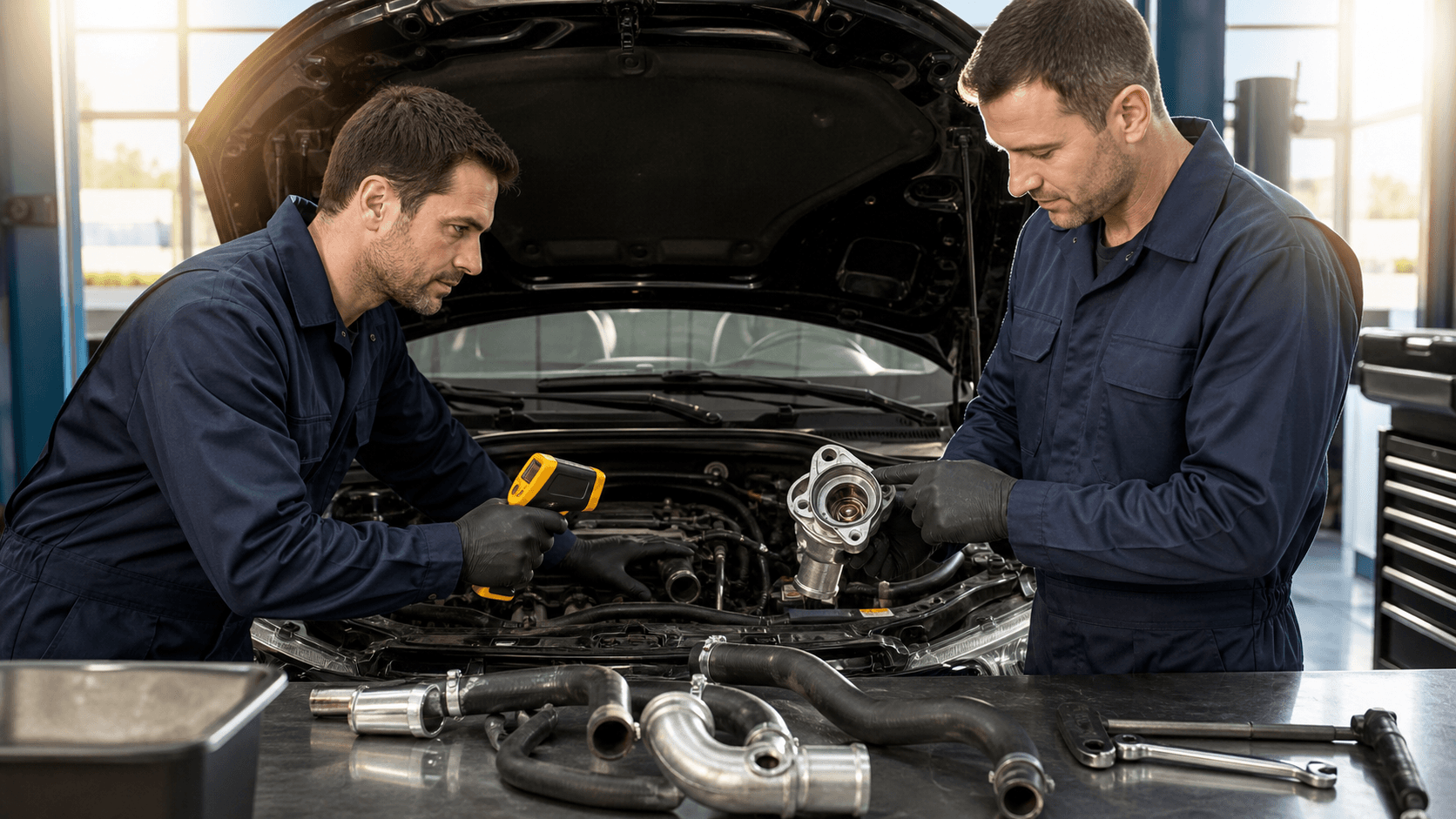
Swapping a thermostat might look simple, but there is more to it than unbolting a housing and dropping in a new part. Modern engines, especially European and diesel engines, often use special thermostat housings, multiple thermostats, and tight engine bays that are hard to reach without the right tools.
Professional thermostat replacement usually includes:
- Confirming the thermostat is actually the problem with proper diagnostics
- Choosing the correct temperature rating and style for your specific engine
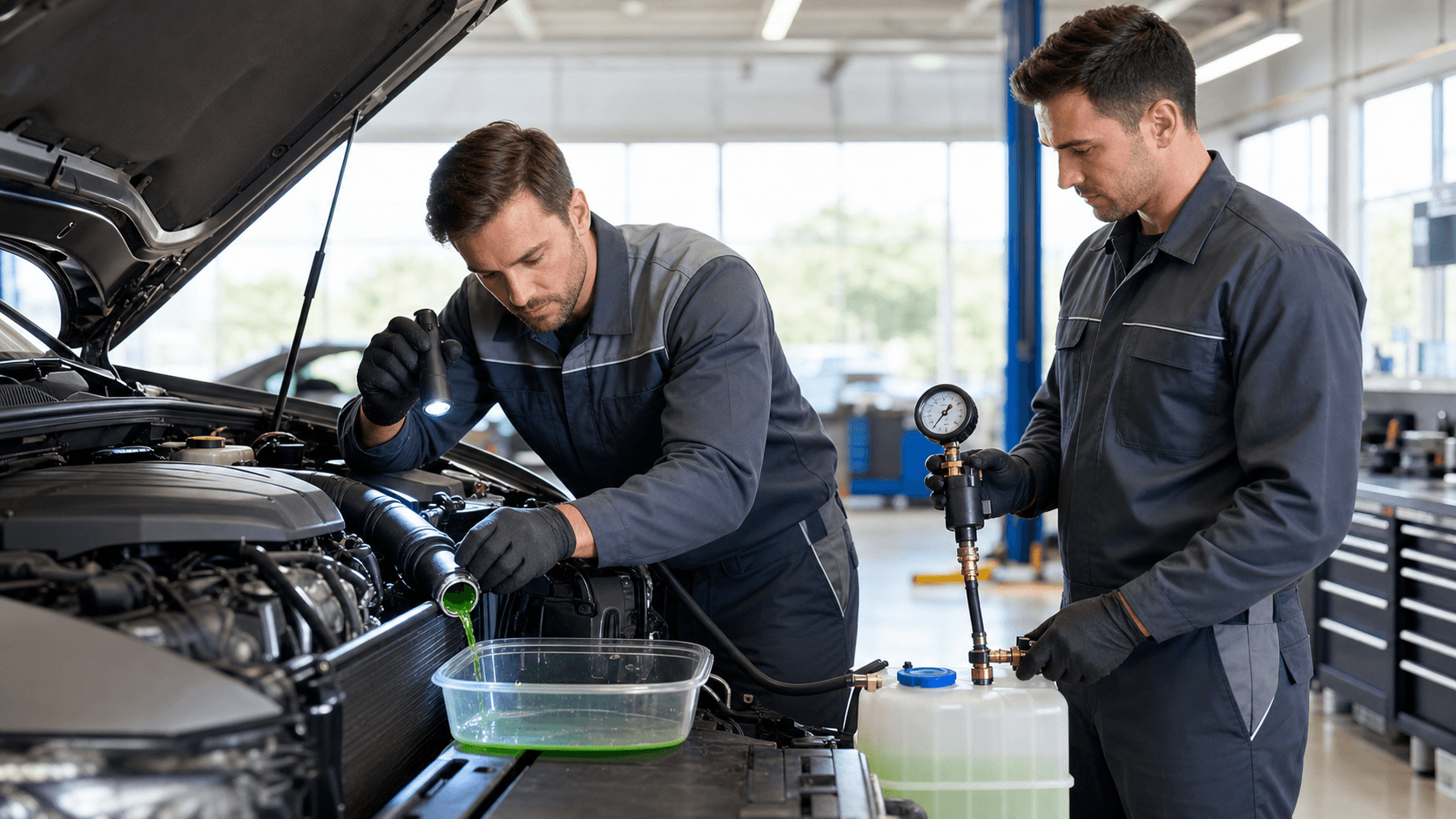
- Refilling coolant correctly and bleeding air from the system
- Pressure testing the cooling system to check for leaks
At a full-service NAPA AutoCare Center like ours, we focus on the whole cooling system, not just the thermostat. During service, we may also check the radiator, water pump, cooling fans, belts, hoses, and heater core. For diesel and fleet vehicles, this careful approach helps prevent repeat breakdowns, reduces downtime, and supports consistent maintenance records for your work trucks.
FAQs About Thermostat Replacement in Sutherlin, OR
What are the typical symptoms that my thermostat needs replacement?
Common warning signs include:
- Overheating or the gauge running hotter than normal
- Fluctuating or unstable temperature readings
- No cabin heat or only weak heat
- Repeated coolant loss or low coolant level
- Temperature or cooling system warning lights
How much does thermostat replacement usually cost?
The cost depends on your vehicle type, the part design, and how hard the thermostat is to reach. Domestic engines are often simpler, while some European, diesel, and fleet vehicles have more complex setups. A proper inspection is the best way to understand the parts and labor needed for your specific vehicle.
How long does thermostat replacement take at a shop like yours?
For many vehicles, thermostat replacement can be done in about one to three hours. Some jobs take longer if the thermostat is buried under other components or if the cooling system has other issues that also need repair.
How often should a thermostat be replaced as maintenance?
There is no strict mileage rule. Many thermostats last a long time, but plenty begin to fail somewhere in the higher mileage range. A smart time to replace one is when you are already doing major cooling system work, like a radiator or water pump replacement, or before a big road trip if your gauge or heater has been acting odd.
Can I still drive if I think my thermostat is bad?
If your gauge is spiking, you see steam, or warning lights are on, it is unsafe to keep driving. Shut the engine off as soon as it is safe to do so and let things cool. If the gauge only runs slightly cooler or warmer than normal but stays steady, a short trip to a shop may be possible, but it is still important to get it checked soon.
What happens if I ignore thermostat problems?
Putting off thermostat issues can lead to serious engine damage, including head gasket failure, warped cylinder heads, or even a cracked engine block. Long-term overheating or running too cool can also affect emission parts, hurt fuel economy, and leave you with no heat when the weather turns cold.
Is thermostat replacement different on European or diesel vehicles?
Yes, many European and diesel engines use more complex cooling systems. Some have multiple thermostats, plastic housings that must be replaced as a unit, or controls that work with the engine computer. These setups often require special tools, extra steps to bleed air, and careful testing.
Do you inspect the whole cooling system during thermostat service?
A thorough thermostat service should include checking coolant condition, radiator flow, hoses, clamps, water pump operation, cooling fans, and the heater core. Pressure testing helps find hidden leaks and weak spots so you are less likely to face another cooling system issue soon after.
Can thermostat issues cause my check engine light to come on?
Yes, if the engine runs too cool or too hot, the computer may see that the temperature is outside the normal range and set a fault code. This can trigger the check engine light and may affect how the engine runs. Proper diagnostics can tell if the thermostat is the root cause or if another sensor or part is to blame.
How can I prevent thermostat and cooling system problems?
Good cooling system care includes:
- Regular coolant flushes based on your vehicle and fluid type
- Seasonal checks before hot summers and colder months
- Watching the temperature gauge and warning lights
- Having leaks or strange heater behavior checked early
Paying attention to these clues can help you catch thermostat issues before they turn into an overheating emergency and keeps your vehicle ready for daily driving, road trips, and work duty alike.
Restore Reliable Engine Performance With Expert Thermostat Service
If your temperature gauge is creeping higher than normal or your heater is acting up, let Over the Hill Auto inspect your cooling system and handle your thermostat replacement before it leads to costly engine damage. We will explain what we find in clear terms, walk you through your options, and get you back on the road with confidence. To schedule an appointment or ask a question about your vehicle, simply contact us today.