Stop Coolant Leaks Before Winter Strands You
Coolant leaks have a way of hiding until the worst possible moment, like a cold morning on the way to work. As temperatures drop around Sutherlin, your engine has to work harder, and a small leak that seemed harmless in summer can suddenly turn into an overheating problem. That can leave you pulled over on the shoulder instead of at work, school, or out on the lake for the weekend.
Coolant does more than just keep your engine from getting too hot. It helps your heater blow warm air, protects metal parts inside the engine from rust, and keeps rubber seals from drying out. When coolant slowly disappears, you lose that protection. In this article, we will talk about how to spot the early hints of trouble, how pressure testing and UV dye help find hidden leaks, and why professional coolant leak repair is one of the best ways to avoid big engine damage and big bills.
Sneaky Signs Your Cooling System Is Losing Coolant
Hidden coolant leaks rarely start with a big puddle under the car. They show up as little clues that are easy to brush off, especially in the fall when you first start using the heater again.
Some common signs include:
- A faint, sweet smell after you park
- The coolant level going down a bit every few weeks
- Needing to add coolant between oil changes
- A thin, foggy film on the inside of windows when you run the heat
You might also see warning signs on the dash. The temperature gauge may creep a bit higher on hills or in traffic, then drop back down when you pick up speed. A coolant or low level light may flicker on during cold starts, then turn off as the engine warms up. These are your early hints that the system is losing pressure or fluid.
Fall weather can hide trouble. The heater can soak up some extra engine heat, so the gauge may not jump as fast even if the engine is working too hard. More condensation on the windshield can cover up that coolant smell or window film. Then a longer road trip or a climb on I-5 can suddenly push a weak system over the edge. When that happens, problems that seemed minor can turn serious very quickly.
How Pros Track Down Hidden Leaks with Pressure Testing
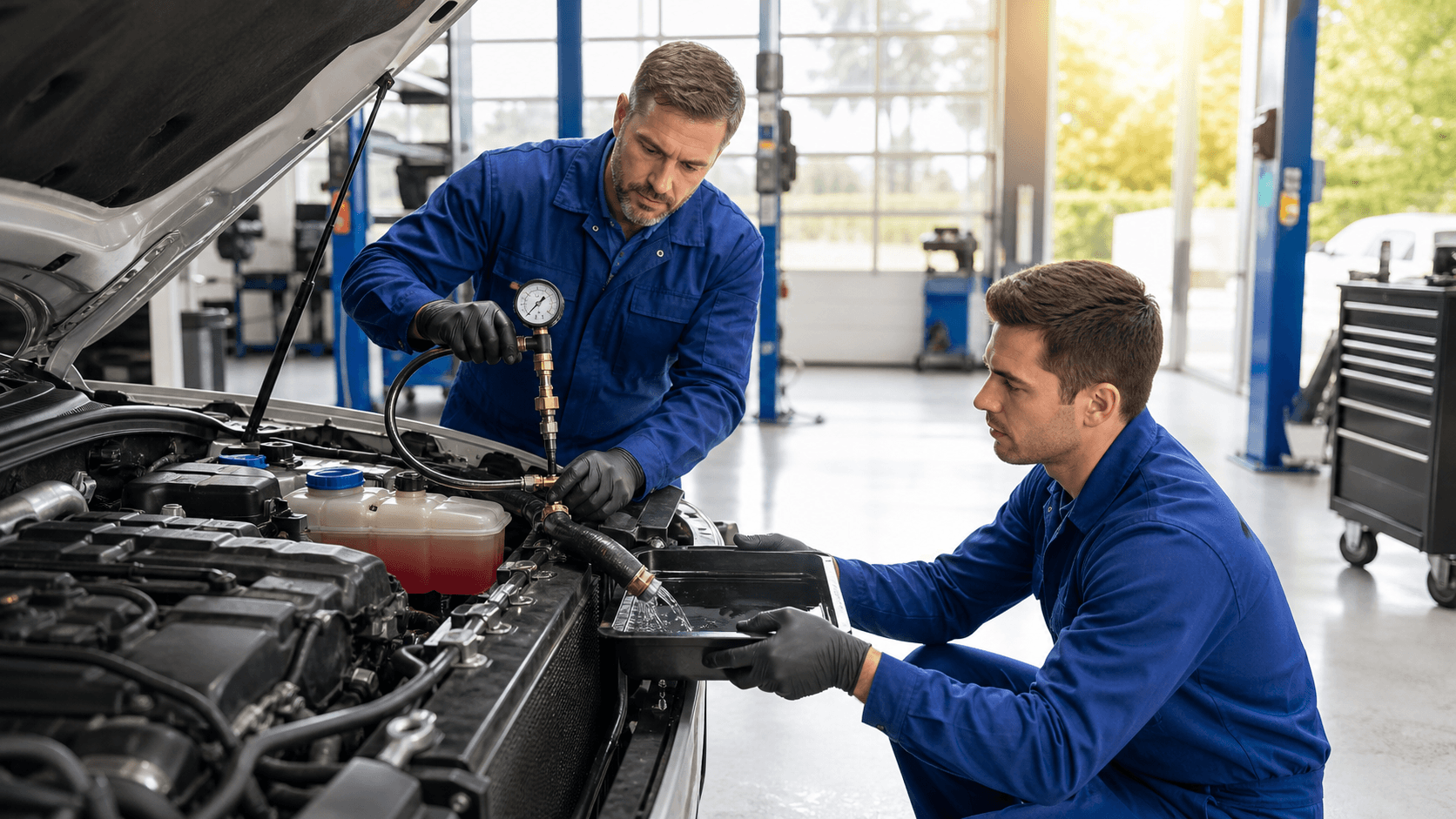
A cooling system that only leaks when it is hot or under load can be hard to find by eye. That is where pressure testing comes in. In simple terms, we attach a special pump and gauge to the radiator or coolant reservoir, then gently pressurize the system with the engine off.
Here is what that does:
- Brings the system up to normal operating pressure without engine heat
- Lets us watch the gauge for pressure loss over several minutes
- Helps us spot even tiny leaks as they start to seep
With the system under pressure, coolant can begin to show up around spots like hose connections, radiator seams, water pump weep holes, and even heater core fittings hidden near the firewall. Some leaks only appear at certain pressure levels, which is why this test is so helpful for accurate coolant leak repair. We do not have to guess where the leak might be. We can see it working in real time.
For most Sutherlin drivers, a basic pressure test does not take very long. A technician brings the system up to pressure, checks under the hood, looks under the vehicle, and may repeat the test after the engine warms up. Afterward, we can explain what we found in plain language, talk about which issues need attention before winter, and help you decide on the next step.
Using UV Dye to Find Leaks You Cannot See
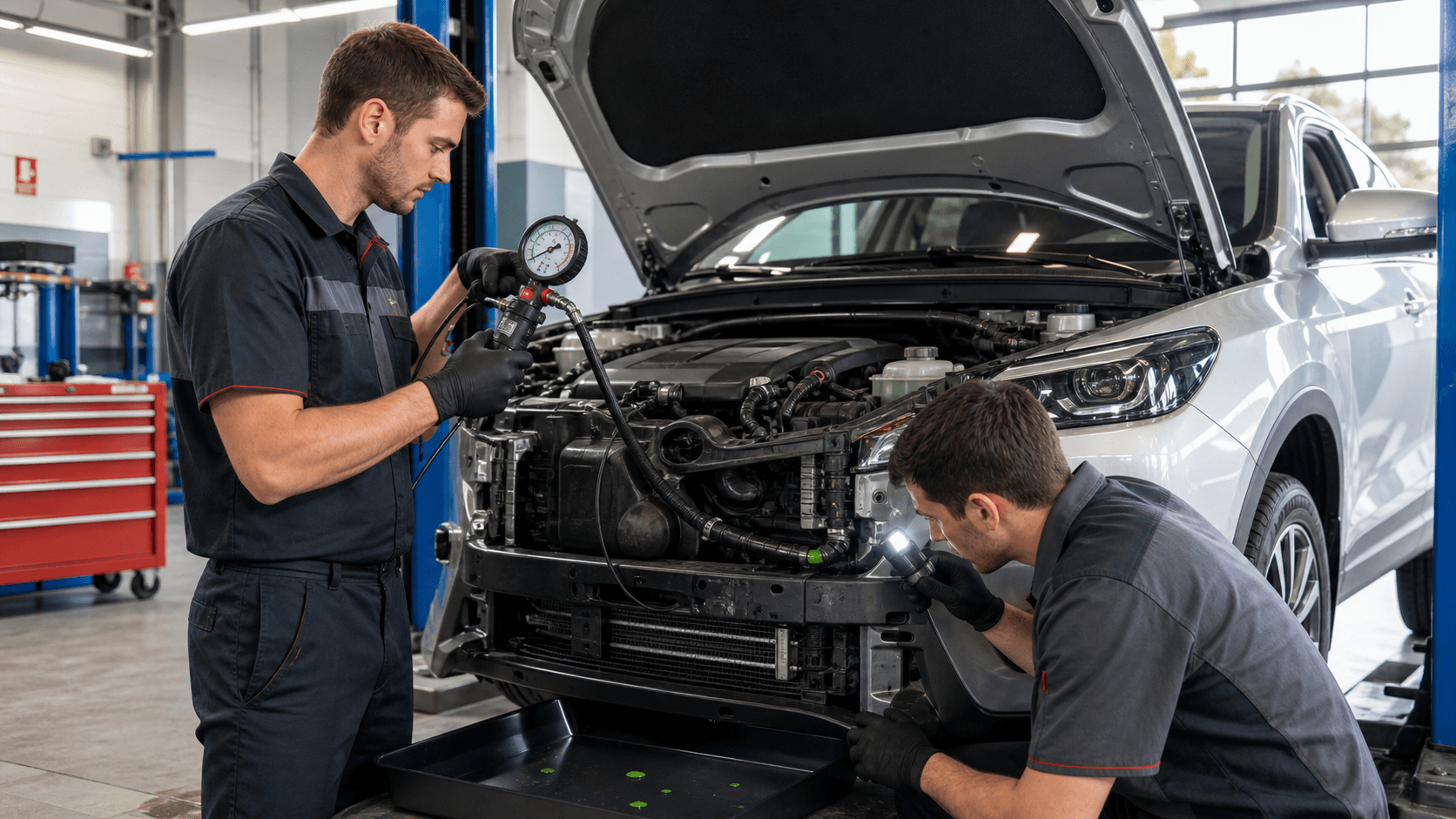
Some leaks are so small, or so well hidden, that they do not show up even under pressure right away. For those, UV dye is a powerful tool. We add a small amount of fluorescent dye to the coolant, then run the engine so the dyed coolant can circulate through the entire system.
After some drive time, we inspect the engine bay and undercar area with a UV light. The dye glows, so even a tiny trace of coolant will light up around:
- Hose joints and clamps
- Radiator and heater core connections
- Tight spaces near a turbo or behind engine covers
- The area around a water pump or thermostat housing
UV dye is especially helpful for seepage that dries before it leaves a drip on the ground, or leaks that only happen when the engine is hot and under load. It lets us trace the path of the leak, not just guess at the source. The dye we use is made for automotive systems, and it is designed so it does not change how the coolant works. It simply gives us a clear visual map, which leads to more confident repair recommendations and fewer return visits for the same issue.
Common Leak Points: Water Pump, Heater Core, Reservoir Cap
Coolant can escape from many places, but a few are more common than others. Knowing these spots can help you understand what we are looking for under the hood.
The water pump is one of the big ones. Inside the pump are seals and bearings that wear out over time. Most pumps have a small opening called a weep hole. When the internal seal begins to fail, coolant starts to seep from that hole. Signs of trouble include:
- Chirping or grinding sounds from the front of the engine
- Dried, crusty coolant around the pump or on nearby parts
- Drips near the center front of the engine bay
A failing water pump can quickly lead to overheating, since it is the part that keeps coolant moving through the engine.
The heater core is another common source, and it tends to leak in sneaky ways. It sits behind the dash and carries hot coolant that warms the air for your heater. When it leaks, you may notice:
- A sweet smell inside the cabin
- A greasy or foggy film on the inside of the glass
- Damp carpet near the front floor area
- A heater that blows only lukewarm air
Because the heater core is buried, a small leak can go on for a long time before someone looks for it. Catching it early, before cold weather really hits, helps avoid bigger repairs and keeps the inside of the vehicle dry and safe.
The reservoir cap and hoses can also cause slow, stubborn leaks. A weak cap or cracked neck can let coolant vent or evaporate instead of holding proper pressure. If the cap rating is wrong or the seal is worn, the system may run too low on pressure, which affects both boiling point and flow. Old hoses, brittle plastic fittings, and loose clamps can seep just enough coolant to cause problems without ever leaving a big puddle. In some cases, replacing a small part like a cap, clamp, or hose section is all it takes to solve a long-term slow leak.
Sutherlin Drivers' FAQ on Coolant Leak Repair
Drivers around Sutherlin tend to ask the same key questions about coolant leak repair, and they are good ones.
What affects the cost of repair?
- Location of the leak, easy access versus buried parts
- Parts that need replacement, such as caps, hoses, pumps, or cores
- Labor time based on your vehicle's design
- Whether the vehicle is domestic, diesel, or European
How long does service usually take?
- Basic pressure testing and inspection can often be done the same day
- UV dye tests may require drive time, then a second inspection
- Common repairs like hoses or caps are often quicker than items like heater cores, which may require more disassembly
When should you seek service?
- Schedule soon if you notice mild coolant smells, small top-offs, or a gauge that runs a bit higher on hills
- Park it now if you see steam, a red-zone temp gauge, very low coolant in the reservoir, or large puddles under the car
What about maintenance and prevention?
- Coolant should be replaced on a regular schedule based on your vehicle type and coolant type
- Fresh coolant helps protect hoses, seals, and internal engine passages
- Regular inspections during oil changes are a simple way to spot early seepage at water pumps, heater core connections, and the reservoir
How do you pick a shop for this kind of work?
A good shop will take time to explain test results, show you what they see, and use parts and coolant that match your vehicle's needs. As a NAPA AutoCare Center, Over the Hill Auto focuses on clear communication and quality parts so you know what is going into your cooling system and what warranty coverage comes with the repair.
Protect Your Engine With Expert Coolant Leak Repair Today
If you have noticed puddles under your car or rising engine temperatures, our team at Over the Hill Auto is ready to help with trusted coolant leak repair. We will inspect your cooling system, explain what we find in plain language, and only recommend the work you truly need. To schedule an appointment or ask a question, simply contact us and we will follow up promptly.