Stay Calm and Save Your Engine on the Roadside
When your temperature gauge suddenly jumps toward the red or an overheating light pops on while you are rolling down I-5 or Highway 138, it is easy to panic. Heat builds fast inside an engine, and it does not take long for real damage to start. Even driving a short distance with an overheated engine can crack a cylinder head, warp metal parts, and lead to big radiator repair and engine bills.
In that moment, what you do in the next few minutes really matters. With a few simple steps, you can protect yourself, keep the damage from getting worse, and set yourself up for a safe repair later. We will walk through what to watch for, how to pull over, how to use the heater trick, when to leave the coolant alone, and when it is time to stop driving and call for help.
Early Warning Signs Your Engine Is Overheating
Engines usually give some warning before they get too hot. If you know the signs, you can pull over before things get serious. Watch for:
- Temperature gauge creeping higher than normal or into the red
- Steam that looks like smoke coming from under the hood
- A sweet smell like syrup or a sharp burnt smell while driving
- Warning lights for engine temperature or check engine
Some signs are easier to miss, especially if you are focused on the road or traffic. These may show up before you even see steam:
- Loss of power when you try to speed up
- Ticking or knocking sounds from under the hood
- Heater suddenly blowing cold air even though the engine is hot
- Temperature gauge bouncing up and down instead of staying steady
Even in cooler Oregon weather, overheating can still happen. Stop-and-go traffic, towing a trailer, long grades in the hills, or wet leaves and road debris stuck in front of the radiator can all cut down airflow and cooling. Your cooling system works hard in every season, not just in the summer.
Safe Roadside Actions to Prevent Major Damage
Once you notice signs of overheating, your goal is simple: lower stress on the engine and get safely off the road. Start by finding a safe place to stop, like a wide shoulder, exit ramp, or parking lot. Turn on your hazard lights so other drivers see you, shift into park, and set the parking brake.
Before you shut the engine off, you can try the heater trick if the gauge is not in the deep red yet and there is no heavy steam. This can pull a little extra heat out of the engine:
- Turn the cabin heater to full hot
- Set the fan to high
- Turn off the A/C to reduce load
- Let the engine idle lightly
If the gauge keeps climbing or you see thick steam, shut the engine off right away. The heater trick can sometimes buy a bit of time to reach a safer spot, but it is not a fix and should not be used to keep driving long distances.
When you are stopped, be very careful around the hood. Heat builds under there, and components can be dangerously hot. Follow these basic safety steps:
- Wait several minutes before opening the hood to let things cool slightly
- Stand off to the side when you unlatch the hood, not directly over it
- Keep hands, hair, and clothing away from belts and fans that may still move
- Stay clear of any leaking coolant, since it can be very hot and slippery
Coolant Checks, Radiator Safety, and When DIY Stops
Coolant is the lifeblood of your cooling system, so it makes sense to want to check it. But an overheating engine means very hot coolant and pressure in the system. That combination can cause serious burns if you rush.
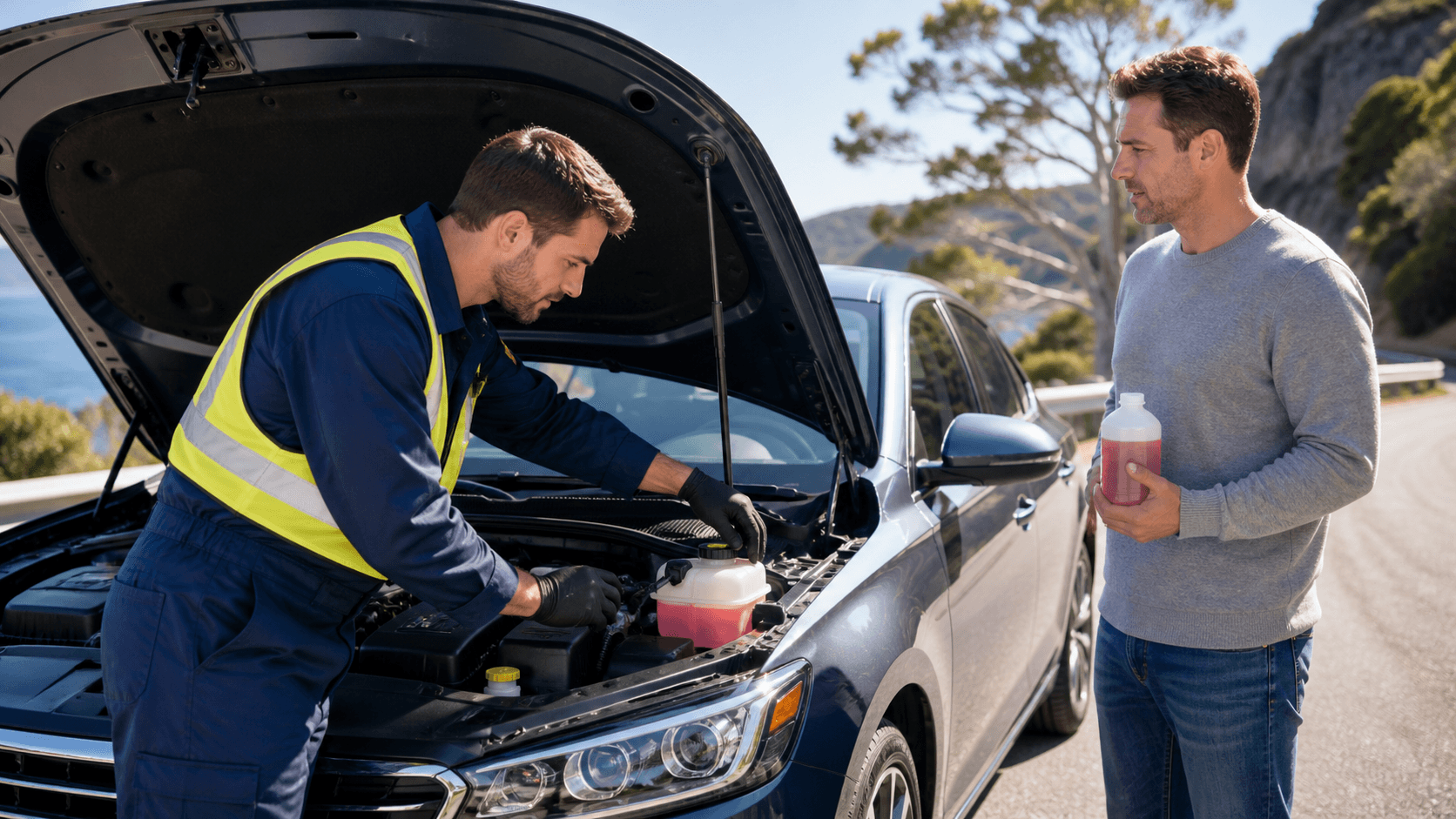
If you want to look at coolant level from the roadside, wait at least 15 to 30 minutes for the engine to cool. Then:
- Find the plastic overflow reservoir, usually near the radiator
- Look for the markings on the side, often labeled Low and Full
- Check the level through the plastic, without opening anything
- Only add coolant if the engine is cool to the touch and you have the right type
Never open a radiator cap or pressurized reservoir when the engine is hot. If you hear hissing, see bubbling, or the hoses feel rock hard, there is still pressure in the system. Opening it can send hot coolant spraying out.
There are times when it is better to stop trying to sort it out yourself and plan for a professional repair:
- Visible cracks or damage on the radiator
- Rusty or crusty buildup around seams and hose connections
- Bright green, orange, or pink puddles under the car
- Coolant level keeps dropping even after you top it off
These can point to problems like a failing radiator, weak hoses, a bad thermostat, or deeper issues that need proper testing and repair, not just a quick top-off.
When You Must Tow Instead of Trying to Limp Home
It is tempting to limp home or to the next exit, but that can turn a small cooling problem into a major engine failure. Use towing if you notice:
- Temperature gauge is in the red or the warning light stays on
- Thick steam or coolant pouring out from under the hood
- Heater blowing cold air even though the gauge shows hot
- Coolant reservoir looks very low or empty and you cannot refill safely
- The engine overheats again after only a short drive
Stopping the engine before it gets badly overheated protects your wallet as much as your car. Radiator repair and cooling system work are usually far less expensive than replacing an engine, especially on diesel and many European vehicles. Getting the vehicle to a trusted shop in Sutherlin, OR, by tow can keep a bad day from becoming a long and expensive one.
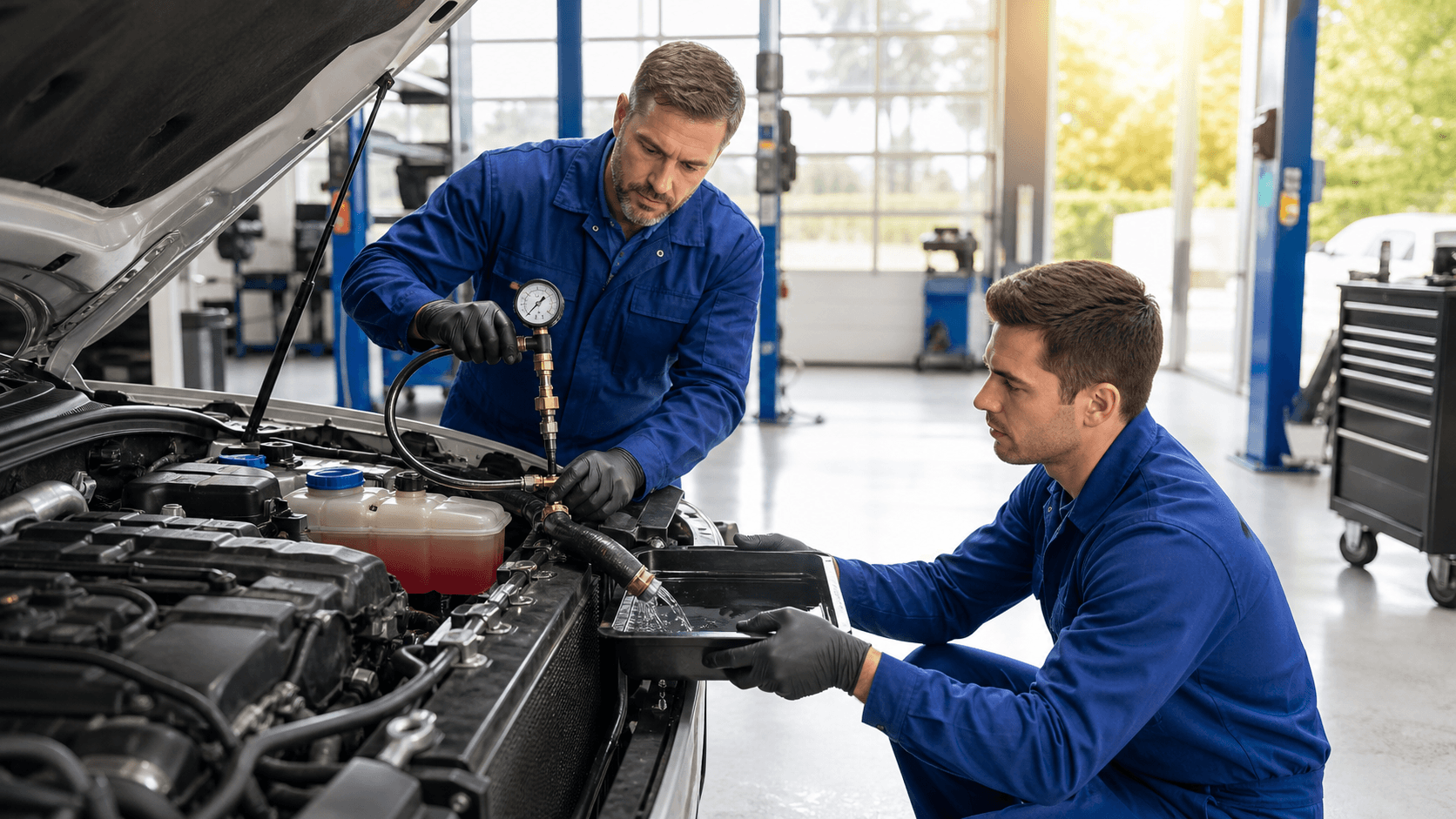
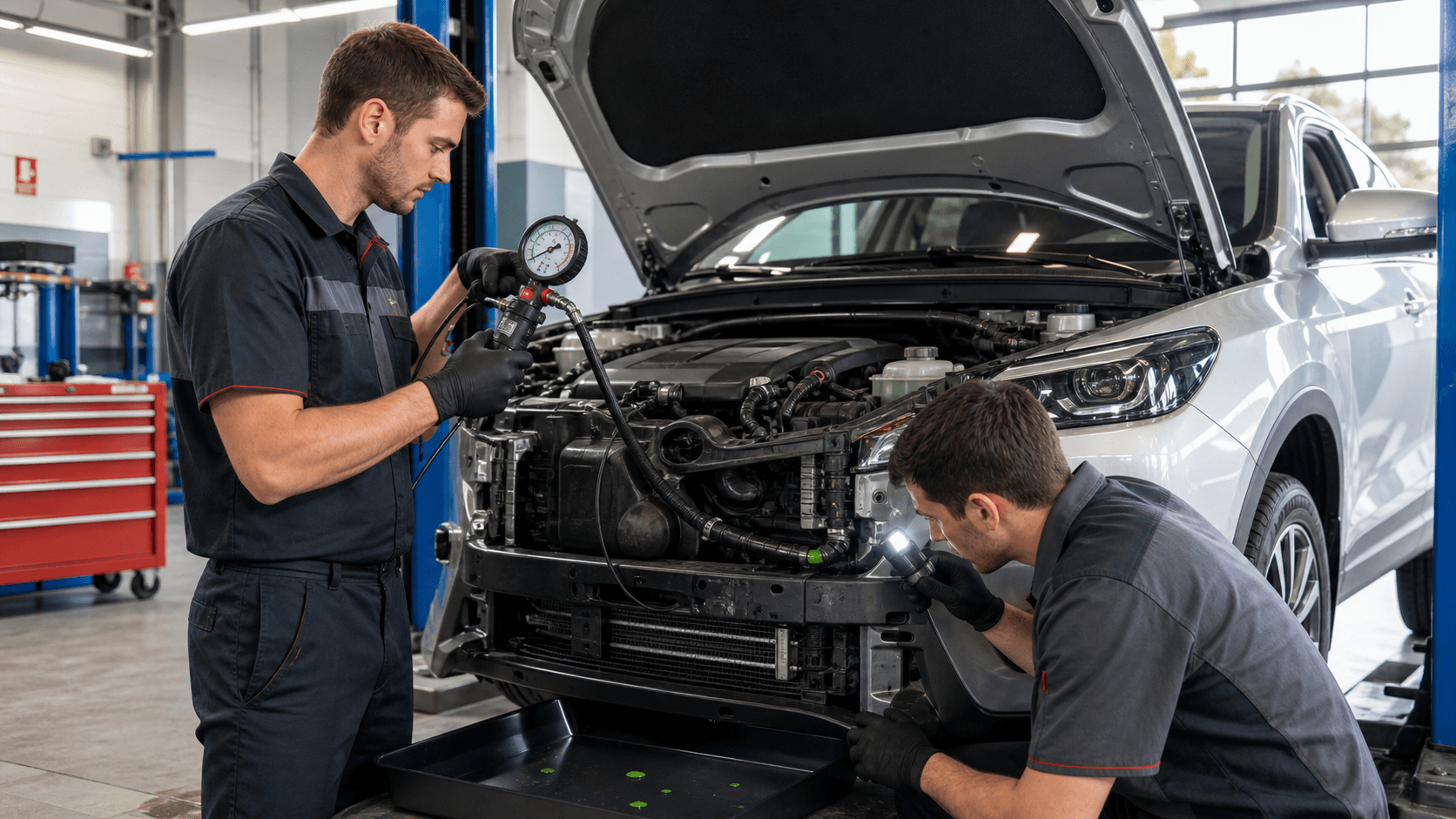
A professional team can test the cooling system, check for leaks, confirm radiator performance, and look for hidden issues like a damaged head gasket or warped parts caused by heat.
Overheating and Radiator Repair FAQ for Sutherlin Drivers
What does radiator repair usually cost?
Costs depend on what is wrong and what kind of vehicle you drive. Common services include:
- Hose replacement and clamp checks
- Coolant flushes and fill with the correct mix
- Radiator repair or replacement when there is damage or internal blockage
- Thermostat replacement or water pump work if needed
Final pricing changes based on parts quality, labor time, and whether overheating has caused extra engine damage.
How long does overheating or radiator repair service take?
Basic inspections, pressure tests, and simple coolant services are often completed the same day or within a day. Larger jobs like radiator replacement, water pump work, or repairs related to head gaskets may take several days, especially if parts need to be ordered.
What are the most common symptoms of a bad radiator or cooling system?
Watch for:
- Overheating while driving or at idle
- Visible coolant leaks or dried coolant on parts
- Needing to add coolant often
- Sweet smells, discolored coolant, or heater problems
- Temperature gauge that swings up and down or fans that run all the time
How often should I service my cooling system or radiator?
Many vehicles need coolant changes roughly every few years or every set distance, depending on the coolant used and the manufacturer. It helps to have the cooling system checked during regular maintenance, especially before long trips or when seasons change and colder weather is on the way.
Can I still drive if my car overheated once but seems fine now?
Maybe, but be careful. Overheating can cause small leaks or weaken hoses that may not fail right away. If the gauge went deep into the red or you drove while it was hot, it is safer to have the system inspected before you put more miles on it.
What should I do if I see steam or smoke but no warning light?
Treat steam or odd smells just as seriously as a warning light. Pull over safely, shut the engine off, and let everything cool before you look around. Even if the light never came on, it is smart to have a shop check the cooling system and radiator.
How can I prevent overheating and avoid costly radiator repair?
Regular inspections go a long way. A professional shop can:
- Check coolant level and condition
- Test the radiator cap and inspect hoses and belts
- Confirm radiator fans turn on correctly
- Look for small leaks and debris blocking airflow
Catching small problems early is the best way to keep your engine safe and your trips around Sutherlin and Roseburg worry-free.
Turn Today's Scare Into Long-Term Engine Protection
Any overheating episode or coolant leak is a warning sign your cooling system needs attention. Taking it seriously now can protect your engine, your radiator, and your peace of mind for the miles ahead.
At Over the Hill Auto in Sutherlin, we offer advanced diagnostics for domestic, diesel, and European vehicles, along with full cooling system and radiator repair backed by NAPA parts and warranty coverage. Treat that spike on your temperature gauge as a chance to protect your engine so it can keep running strong on every drive.
Restore Your Cooling System's Reliability Today
If your vehicle is running hot or showing signs of a leak, our expert radiator repair service can help you avoid costly engine damage. At Over the Hill Auto, we take time to diagnose the problem correctly and recommend only the work you truly need. Schedule an appointment that fits your day and let us get your car back to dependable performance. If you have questions before booking, feel free to contact us.