Stop Stranding Your Day: Catch Failing Fuel Pumps Early
A fuel pump has a simple job: move fuel from the tank to the engine at the right pressure so your vehicle can start and run. When it starts to fail, your day can go sideways fast. This can mean being stuck in your driveway in the morning or on the shoulder of I-5 on the way to work.
Around Sutherlin, many drivers count on their vehicles for rural back roads, highway trips to Roseburg or Eugene, towing trailers, and weekend drives. In all those situations, a weak fuel pump can turn into a sudden stall or a no-start problem. Ignoring the early warning signs can lead to unsafe situations, especially in heavy rain, low visibility, or on narrow shoulders.
We want drivers to know what to watch for so small hints do not turn into big headaches. With proper diagnostics, a shop can confirm if you really need fuel pump replacement or if something else is going on in the fuel or ignition system.
Common Fuel Pump Warning Signs Drivers Notice
A fuel pump often gives hints before it quits completely. Some of the most common signs include how your engine starts, how it pulls, and how it sounds.
You might notice:
- Hard starting after the vehicle sits overnight
- Long cranking before the engine fires up
- The engine not starting at all, even though it cranks normally
As temperatures cool off, a weak pump or dropping fuel pressure can show up more when the car has been parked for hours. Many drivers first notice it on that first cold start of the day.
While driving, watch for:
- Sputtering or jerking at steady highway speeds
- Loss of power when climbing hills toward the coast or passing on Highway 99
- Struggling for power when towing or hauling loads
Random stalling at stoplights or when coming to a stop can also point toward fuel delivery problems. Sometimes, the engine will restart right away; other times it may crank but not fire for a while.
You might also hear:
- A high-pitched whining or humming sound from the fuel tank area
- A change in the normal sound when you turn the key on before starting
Poor acceleration, surging, or a feeling that the vehicle keeps changing how hard it pulls can all be tied to inconsistent fuel pressure.
How to Tell Fuel Pump Issues From Other Problems
Fuel pump symptoms can feel a lot like other engine problems. That is why guessing and throwing parts at a car often wastes money.
Some issues that can mimic a bad pump include:
- Worn spark plugs or ignition coils causing misfires
- A clogged or dirty fuel filter restricting flow
- Dirty or sticking fuel injectors
- Faulty sensors or wiring in the ignition system
For example, rough idle or hesitation can be caused by weak spark, air leaks, or bad fuel as easily as low fuel pressure. A no-start can come from a dead battery, failed crank sensor, or security system issue, not just the pump.
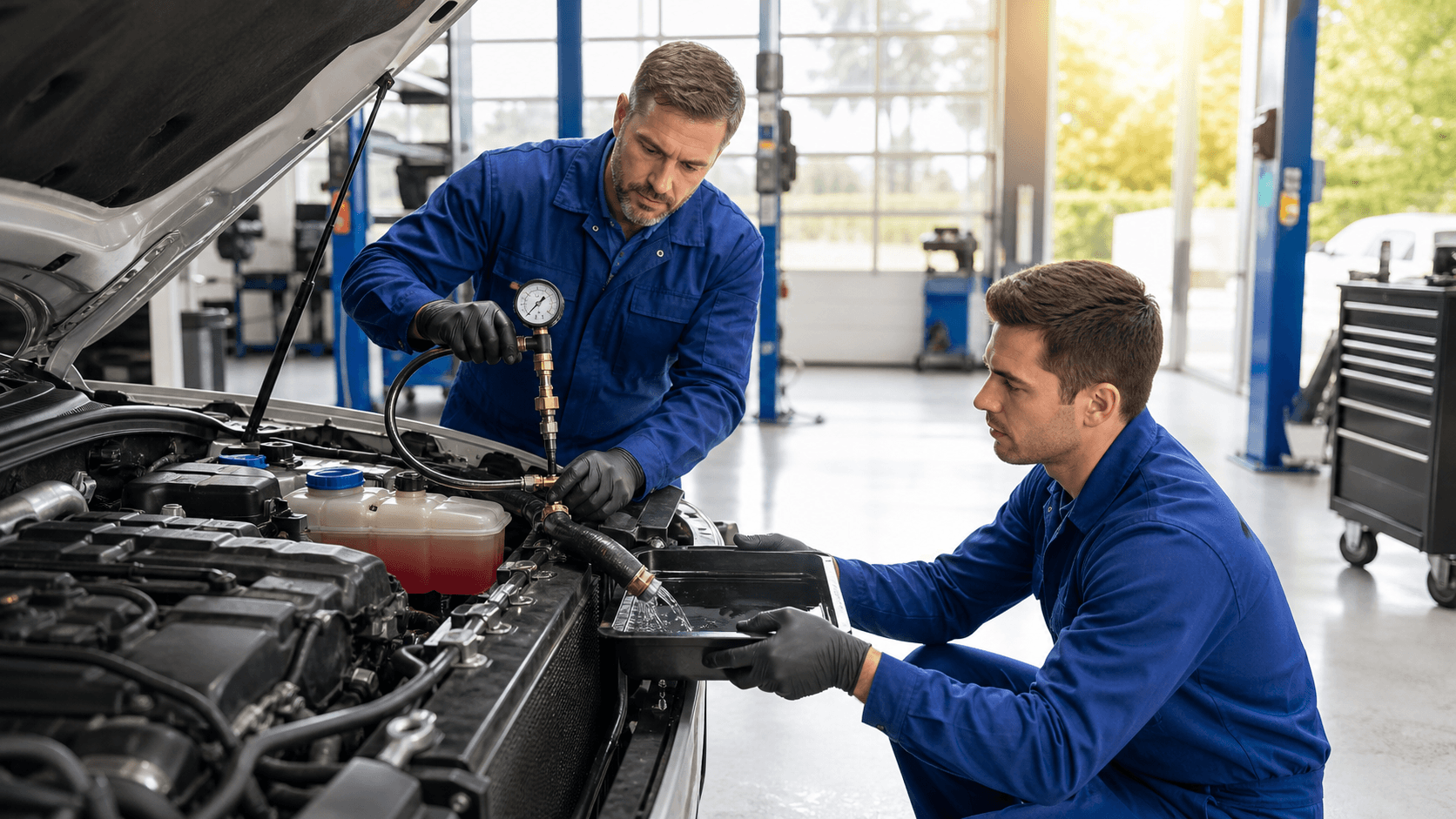
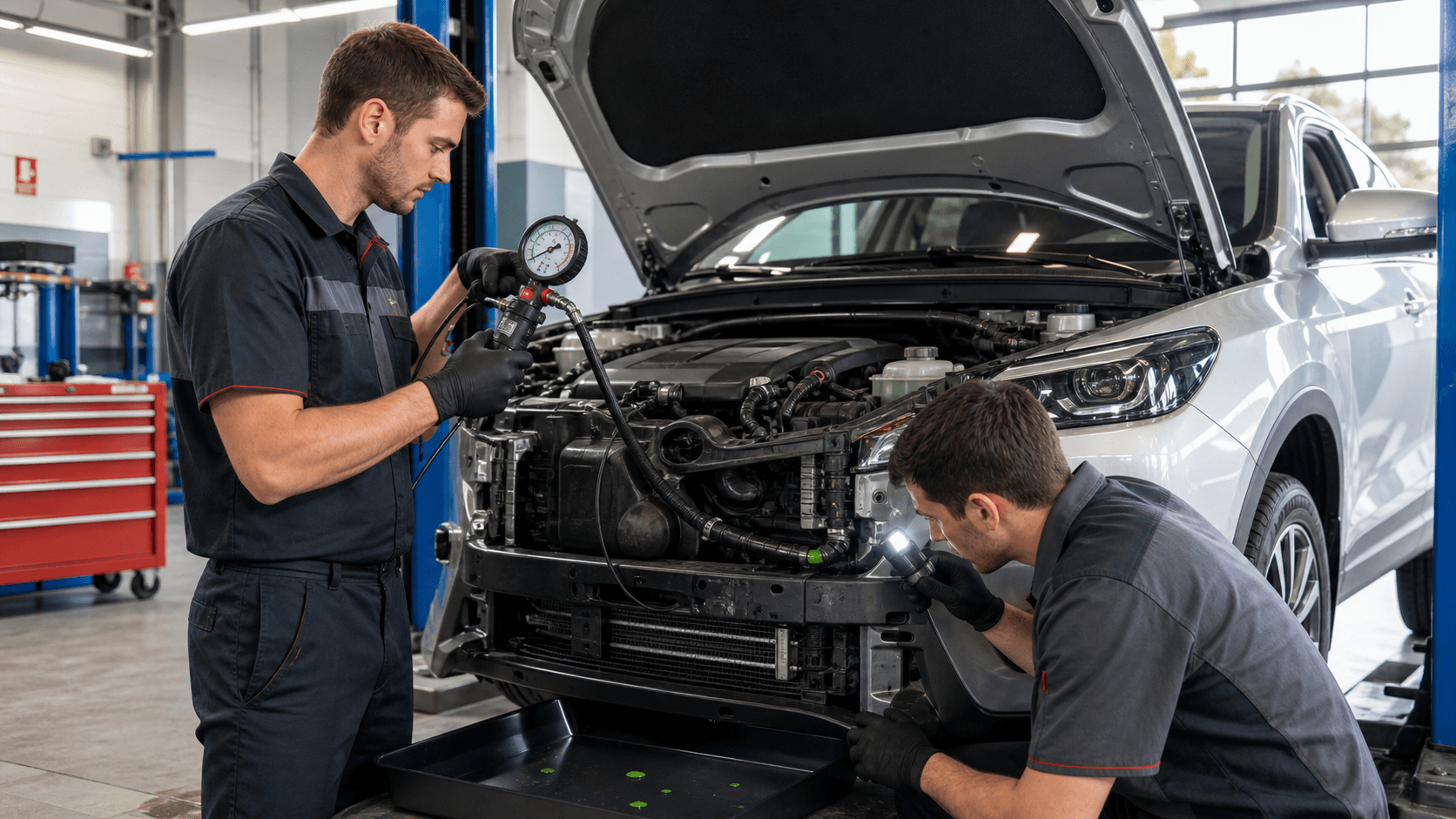
Proper diagnostics usually include:
- Fuel pressure testing at the rail
- Watching scan tool data while driving or cranking
- Checking fuel volume, not just pressure
- Verifying power and ground to the pump and related relays
With that information, a technician can narrow down whether the pump itself is failing, the filter is plugged, or an electrical problem is stopping the pump from doing its job. This helps avoid replacing an expensive pump when the real issue is a simple wiring fault or another part of the fuel system.
What to Expect From Professional Fuel Pump Replacement
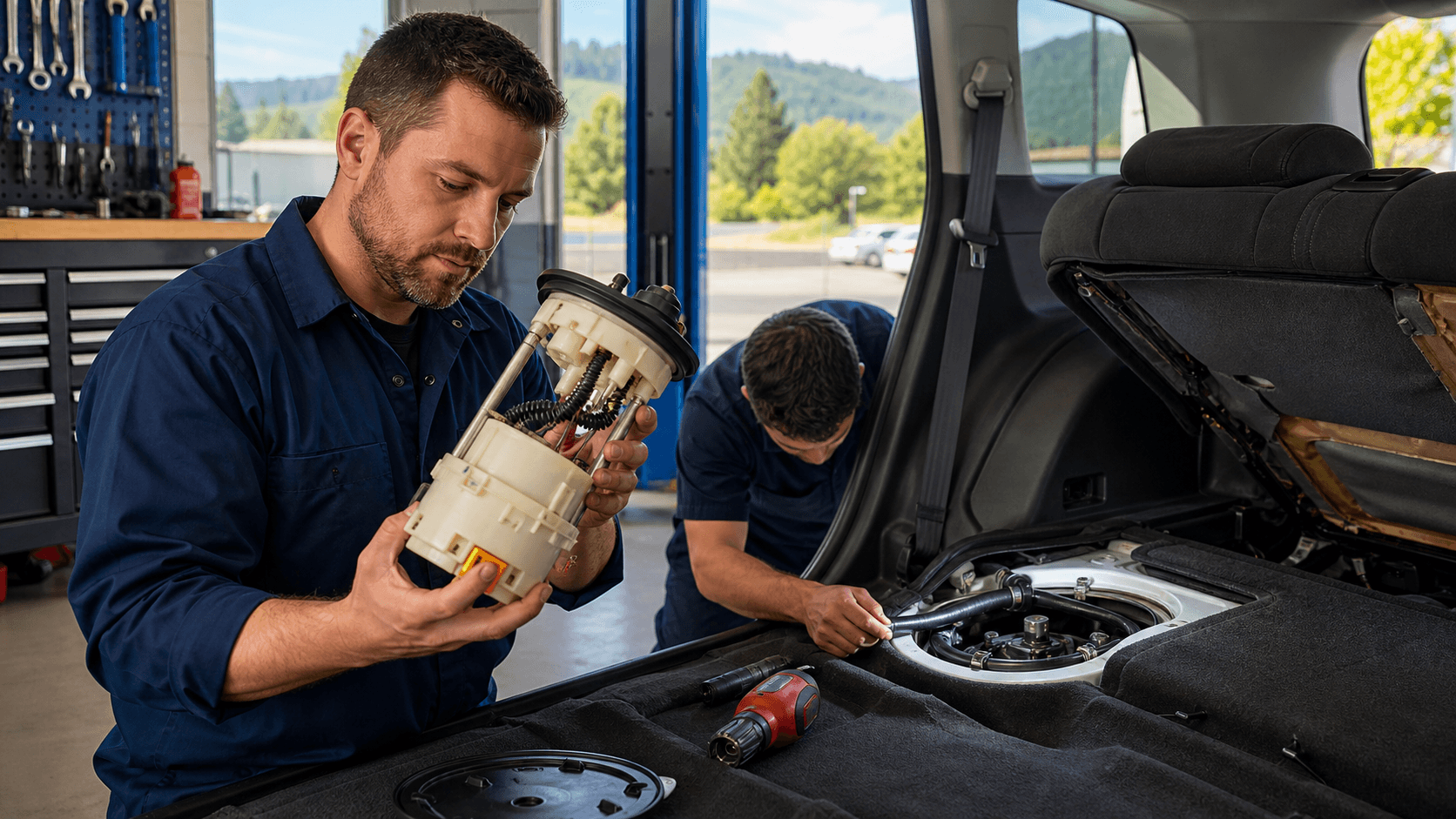
If testing confirms that your pump is worn out or failing, it is helpful to know what happens next. Most pumps are in the fuel tank, so the job often involves lowering the tank from the vehicle or going through an access panel if one is available.
The general process looks like this:
- Confirm the diagnosis and inspect the rest of the fuel system
- Safely relieve fuel pressure and deal with any remaining fuel in the lines
- Remove the tank or access cover and disconnect lines and wiring
- Replace the pump assembly, seals, and often the filter or strainer
- Reinstall parts, clear any codes, and verify pressure and performance
Timeframes vary by vehicle. Many common domestic cars and trucks can be done in about a day of shop time, but some jobs take longer. Things that can stretch the time include:
- Rusted hardware or straps that hold the tank
- Damaged or contaminated tanks that need extra cleaning
- Complex diesel or European fuel systems with special components
Costs are shaped by the vehicle make and model, whether the system is gas or diesel, if the pump is in-tank or external, and what related parts need attention. Quality parts and proper installation help support long-term reliability and warranty coverage.
Protecting Your New Fuel Pump for the Long Haul
Once you have a healthy pump in place, some simple habits can help it last longer. A big one is fuel level. Running very low on fuel all the time can make the pump work hotter and harder because many pumps rely on fuel in the tank for cooling.
Helpful habits include:
- Try not to drive below a quarter tank on a regular basis
- Fill up with good-quality fuel from trusted stations
- Keep up with recommended fuel filter service
- Address check engine lights or performance issues early
In Sutherlin and around Southern Oregon, dusty rural roads and gravel driveways can add dirt to the fuel system over time if vents and caps are not sealed well. Towing, frequent mountain driving, and heavy loads also work the pump harder as the engine demands more fuel.
Regular maintenance visits give a technician a chance to catch small fuel system concerns before they turn into a failed pump. That might include checking for leaks, listening for unusual pump noise, or looking at long-term fuel trims with a scan tool to spot a lean condition.
Fuel Pump Replacement FAQs for Sutherlin Drivers
What are the main symptoms of a bad fuel pump?
Common signs include hard starting, long cranking, sputtering at speed, loss of power, random stalling, and whining noises from the tank. Early signs might be mild hesitation or occasional hard starts. Emergency signs are repeated stalling, no-start conditions, or loud new noises from the fuel tank area.
How long does fuel pump replacement take?
Many vehicles can be inspected, diagnosed, and repaired within a day of shop time, especially if parts are readily available and the tank comes down without a fight. Jobs can take longer if the tank is difficult to access, hardware is rusted, or extra repairs are needed.
How often should a fuel pump be replaced?
Most pumps are designed to last many miles when the fuel system is in good shape. There is no set mileage interval. Lifespan depends on fuel quality, how often the tank runs low, driving style, towing, and whether filters and injectors are kept clean.
Can I drive with a failing fuel pump?
It may run for a while, but it is risky. A weak pump can cause sudden stalling at intersections, in traffic, or on the highway. If the vehicle still runs but shows mild symptoms, some drivers choose to carefully bring it to a shop. If it stalls often, will not restart at times, or feels unsafe, towing is usually the better choice.
Is fuel pump replacement the same for diesel and gas vehicles?
No. Diesel systems often run at much higher pressures and may have multiple pumps, special filters, and unique priming or bleeding procedures. Many European models also have more complex systems that require specific testing methods and parts.
Will a new fuel pump improve performance or fuel economy?
If the old pump could not keep up, a new pump can restore normal power and smoothness. Drivers may notice fewer hesitations, less stumbling, and easier starts. Fuel economy might improve if the engine was running lean or misfiring due to low fuel pressure, but any other underlying issues must also be addressed.
Can I replace my own fuel pump at home?
Fuel pump work involves handling fuel, supporting and lowering tanks, and working around fumes and ignition sources. It often calls for special tools and safety steps. Professional installation and testing help protect both your safety and your investment in parts, and give you confidence that the repair is done right.
Restore Reliable Performance With Expert Fuel Pump Service
If your vehicle is hard to start, sputtering, or losing power, we can diagnose the issue and handle your fuel pump replacement quickly and correctly. At Over the Hill Auto, we focus on dependable repairs that keep you safely on the road, not temporary fixes. Reach out today through our contact page to schedule an appointment and get your car running the way it should.