Staying Safe When Your Coolant Disappears
A sudden coolant problem on an Oregon backroad can turn a nice drive into a stressful moment. Maybe you are heading up into the hills, cruising along the coast, or driving home after a long day and the temperature gauge jumps, a warning light pops on, and you see steam.
The first goal is simple: protect you, your passengers, and your engine. In this guide, we will walk through what to do right away, what not to touch, how to decide if you can limp to a shop without overheating, and how to prevent the next close call. We will keep it simple and focused on real steps you can take on the side of the road.
When you see that temperature needle climb or steam start to rise, stay calm. Take your foot off the throttle, let the car slow gently, and avoid hard braking. Look for a wide shoulder, turnout, or gravel area, then pull off as far from traffic as you safely can. Set the parking brake, turn your front wheels away from the road, turn on your hazard lights, and keep everyone inside the vehicle and out of traffic.
Before you even pop the hood, do a quick check from your seat:
- Look for warning lights or messages on the dash
- Notice if the heater suddenly blows cold air
- Sniff for a sweet smell that can mean coolant, or a harsh burnt smell
If you see a big puddle forming under the front of the car or heavy steam, assume the engine is very hot. Do not open the radiator cap. Hot coolant can spray out under pressure and cause serious burns. Also, do not try to "just push on" with the gauge pinned in the red. It does not take long for extreme heat to damage head gaskets, warp cylinder heads, and ruin an engine.
Safe Roadside Checks You Can Do Without Getting Hurt
Once you are safely off the road, give the engine time to cool. This usually means at least 20 to 30 minutes, sometimes longer. You can carefully rest your hand on the hood to feel for heat. If it is too hot to keep your hand there, it is too hot to open anything under the hood.
When things feel cooler, you can gently open the hood while standing off to one side. Do not remove any caps yet. Start with simple visual checks:
- Look at the coolant overflow tank if it is see-through
- Look for cracked or collapsed hoses
- Check for broken plastic fittings around the radiator area
Try to spot where the coolant went:
- A steady stream or large puddle usually means a major leak
- A slow drip can point to a small hose, clamp, or fitting leak
- Green, orange, or pink puddles often signal coolant, not just water
- White steam around the radiator or hoses means hot coolant vapor
You can also listen for soft hissing sounds that may show pressure escaping from a small leak. Take a quick look at the serpentine belt to see if it is still in place and not shredded. Check that leaves, plastic bags, or debris are not jammed in front of the radiator or blocking the cooling fans, which can be common on fall backroads.
There are also clear "do nots" out here on a shoulder:
- Do not crawl under the vehicle with traffic close by
- Do not put fingers or tools near fans or belts, even with the engine off
- Do not pour plain water into a hot engine when the air is freezing
- Do not treat any temporary patch as a long-term fix
Deciding to Limp to a Shop or Call for a Tow
After the engine cools, you have to decide whether to drive or tow. Only consider driving if:
- The temperature gauge drops back to its normal range and stays there at idle
- You see only a small seep or drip, not a steady stream of coolant
- The heater still blows warm air once the engine has run a bit
- There is no metallic knocking, rough running, or loss of power
If all that looks and sounds good and you must move the vehicle, drive slowly and gently. Use light throttle, pick lower gears on long hills, and turn off the AC to reduce engine load. Watch the temperature gauge every few seconds, especially on steep Oregon backroads. If the needle starts to climb, pull over again right away and let it cool.
Call for a tow and stop driving immediately if:
- The gauge is in the red or close to it
- Steam is billowing from under the hood
- A low coolant warning returns right after you add coolant
- The engine oil looks milky or foamy on the dipstick
- The vehicle overheats again within a mile or two
A local repair shop that understands gas, diesel, and European cooling systems can be a real safety net when you are stuck on I-5 or a Sutherlin area backroad. Getting to a professional coolant leak repair shop quickly by tow can save an engine that would otherwise be ruined by repeated overheating.
Smart Temporary Top-Offs and Short-Term Fixes
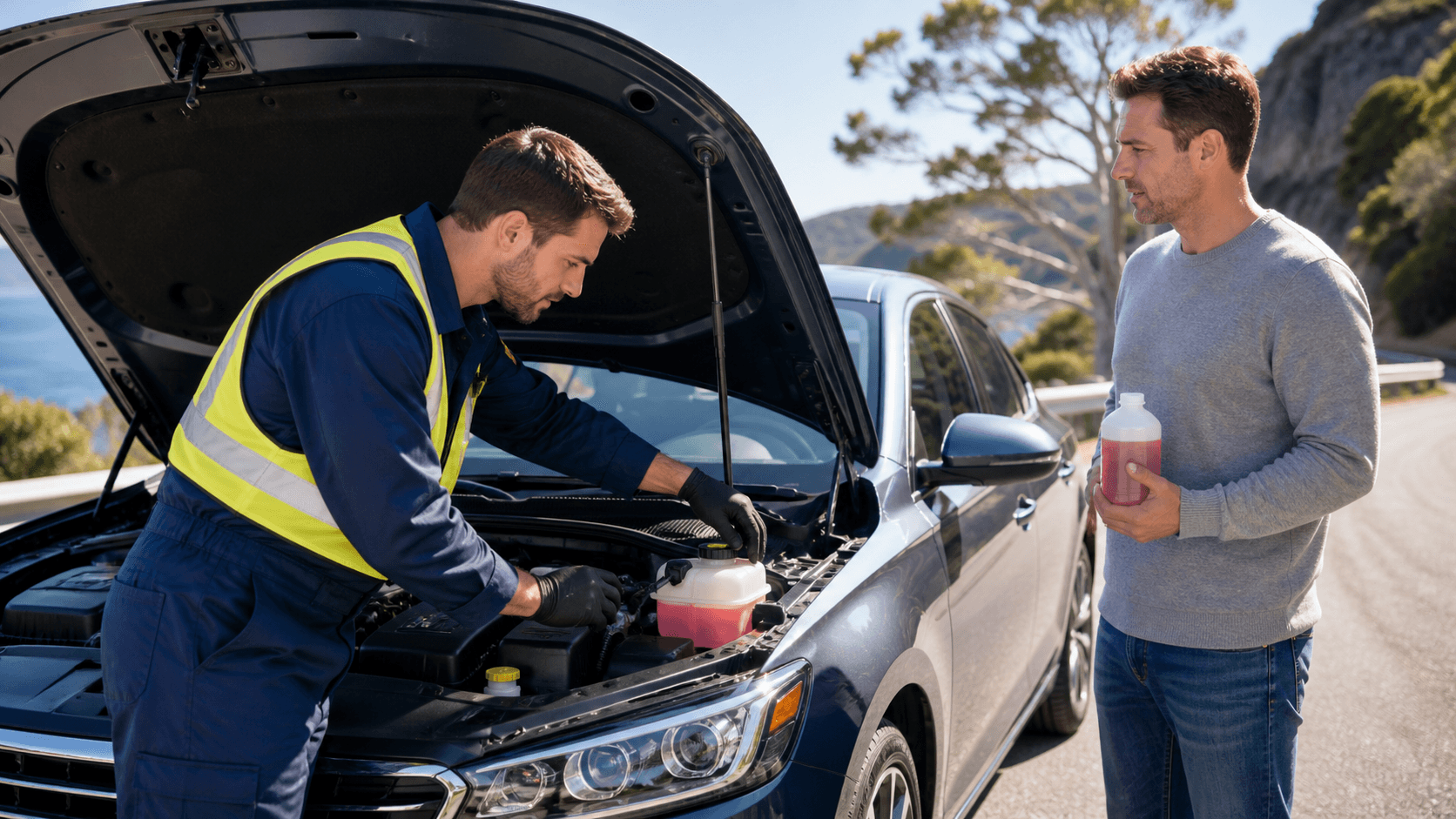
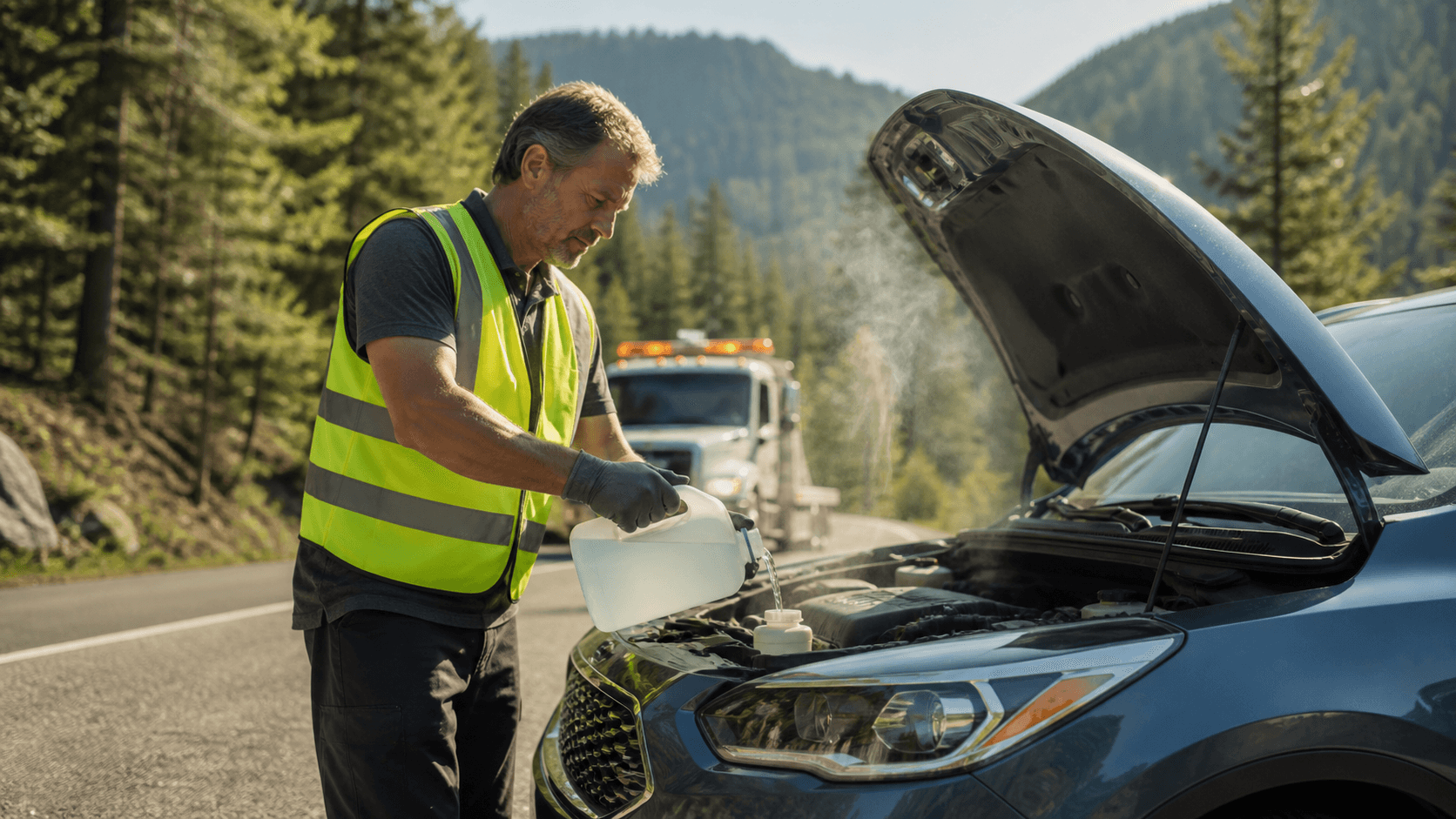
Sometimes you may need to add fluid just to get from the shoulder to a shop. The safest choice is the correct 50/50 coolant mix for your vehicle. If that is not available and the weather is mild, clean water can be a short-term option just to refill low coolant so you can move a short distance. Plan to have the coolant reset to the proper mix as soon as you can, because Oregon temperatures can drop quickly.
Here is a simple top-off routine:
- Make sure the engine is cool to the touch
- Wrap a rag around the cap and slowly loosen it, letting any remaining pressure vent
- Fill only to the marked level; do not overfill
- Tighten the cap fully and securely
- Start the engine, let it idle, and watch for new leaks from a safe distance
Some drivers carry emergency sealants or "stop leak" products. These may help slow a tiny radiator seep for a short time. They will not fix a blown hose, cracked radiator tank, or failing water pump. Even when they appear to help, they are only a bandage, and proper coolant leak repair by a professional should follow as soon as possible.
If you do decide to drive slowly to a shop, try to:
- Choose flatter routes instead of long climbs
- Avoid heavy traffic and long idle times
- Pull over early if the gauge starts to climb
- Call ahead so the shop knows you may be arriving with an overheating issue
Preventing Coolant Emergencies Before They Start
Cool nights, fog, leaf debris, and busy holiday travel can all raise the odds of a coolant surprise on an unfamiliar road. A little prep before fall and winter trips goes a long way.
Good preventive maintenance includes:
- Regular coolant changes based on mileage or time
- Hose and clamp checks for softness, swelling, or cracking
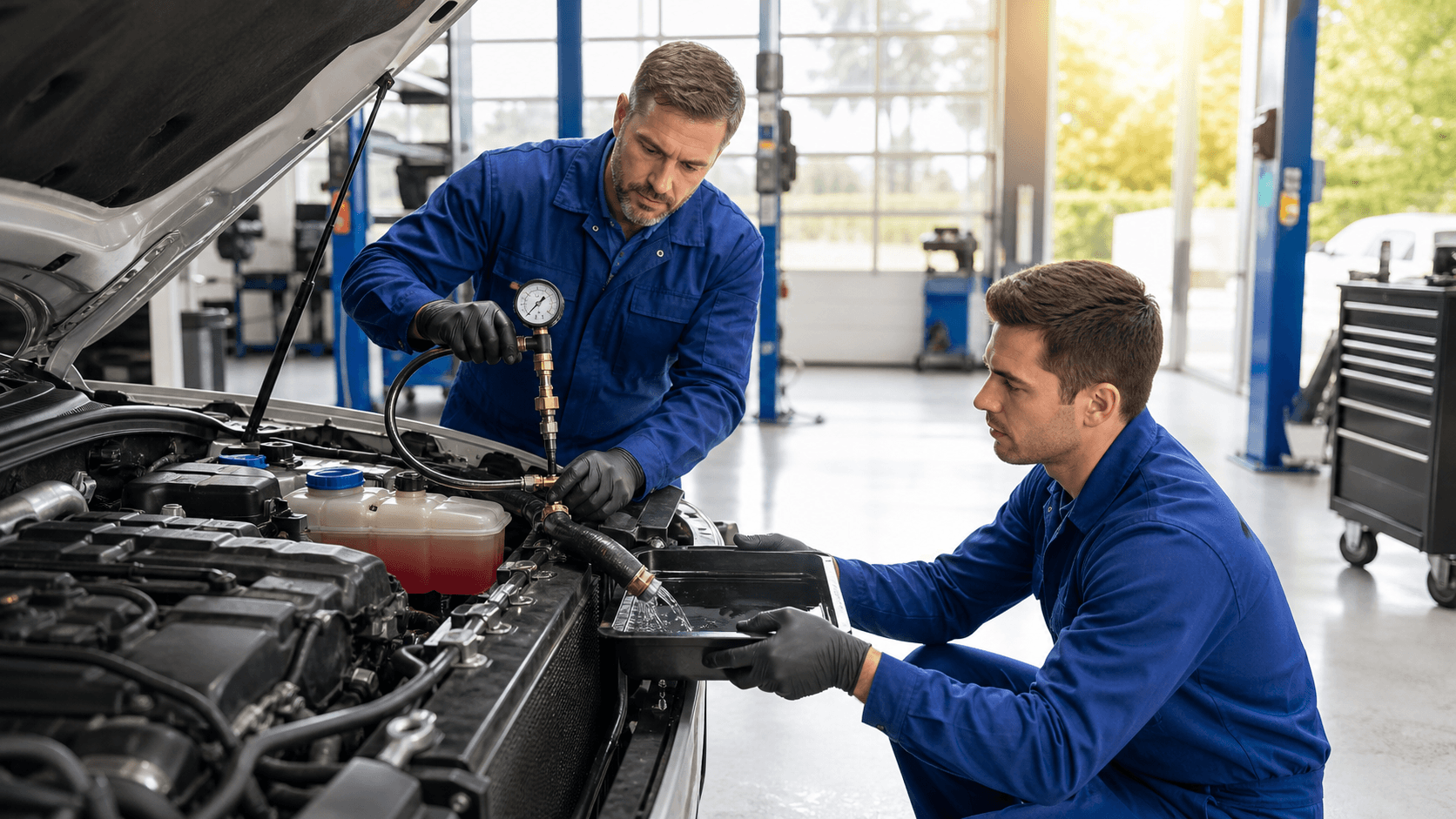
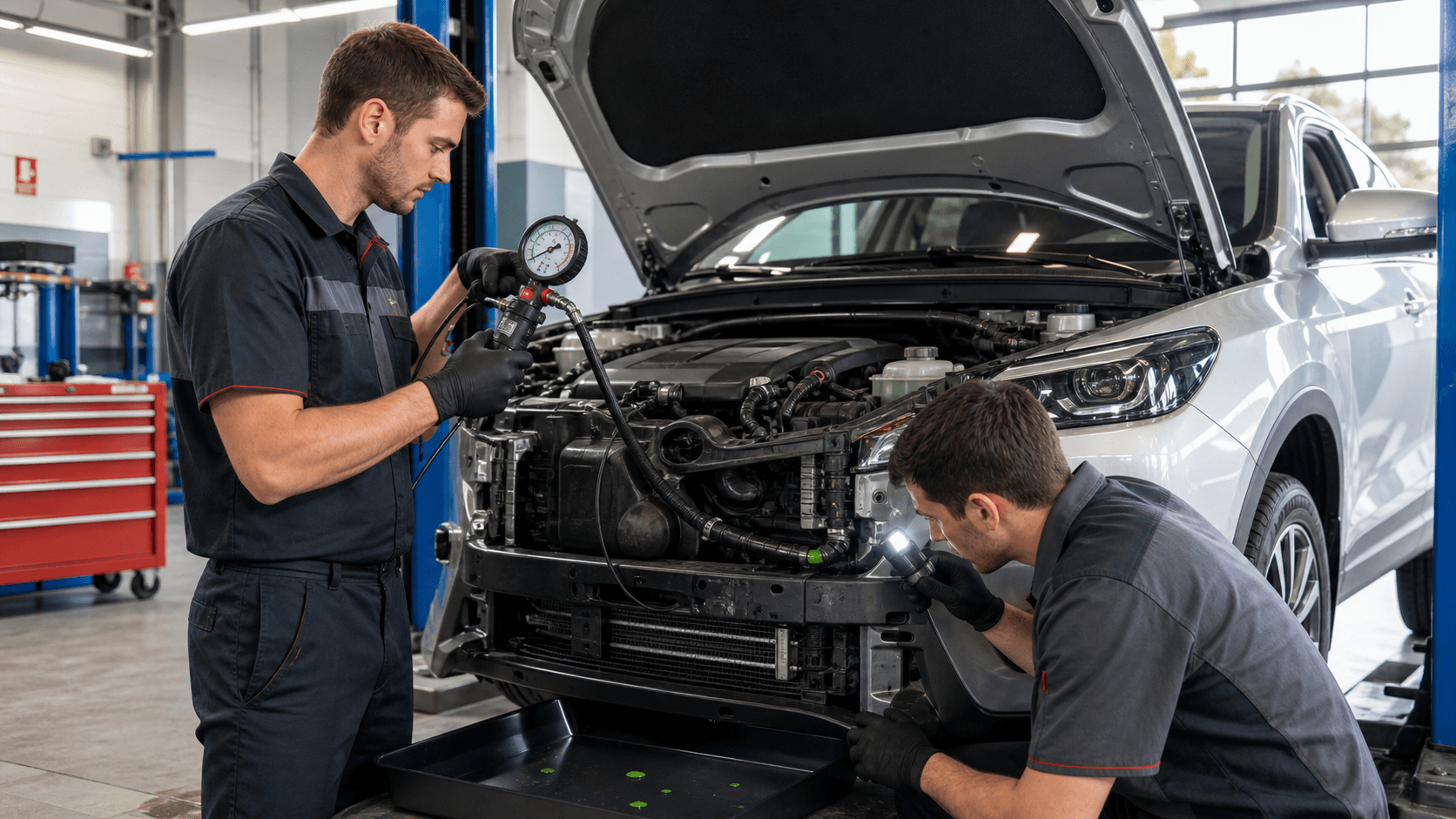
- Pressure testing the cooling system for small hidden leaks
- Using the correct coolant type, especially on modern gas, diesel, and European vehicles
There are early warning signs many drivers ignore:
- A faint sweet smell after shutting off the engine
- Slight coolant loss that slowly drops the overflow tank over weeks
- A temperature gauge that runs a bit warmer on long grades
- Heater that sometimes blows cooler than normal
Catching these small hints early at a full-service shop lets technicians check coolant strength, radiator condition, thermostat operation, heater core flow, and sensor data with advanced diagnostics. That is often the difference between a simple repair and a future roadside breakdown.
Common Coolant Leak Repair Questions
Here are some questions drivers often have about coolant issues.
How Much Does Coolant Leak Repair Usually Cost?
Costs can range widely depending on what is wrong and the type of vehicle you drive. Simple repairs like a loose clamp, a bad hose, or a leaking cap are usually on the lower end. Components such as radiators, water pumps, or heater cores are more involved and cost more because of parts and labor time. Internal engine repairs related to head gaskets or cracked heads are the most expensive. A proper inspection at the shop will pinpoint the problem so you can get an accurate estimate before any work begins.
How Long Will Coolant Leak Repair Take?
Simple fixes like a loose clamp or worn hose can often be handled the same day once the problem is confirmed. Larger jobs, like radiator replacement, heater core work, or internal engine repairs, can take longer because of part access, ordering specific components, and the need for careful testing after the repair. Your shop can give you a time frame once the source of the leak is identified.
What Symptoms Mean I May Have a Coolant Leak?
- Puddles or drips under the front or middle of the vehicle
- A steady sweet odor after driving
- Frequent low coolant warnings or the need to top off
- Rising temperature on hills or in traffic
- Poor heater output or sudden white steam from under the hood
On diesel and many European engines, cooling systems often run higher pressures and have more hoses, tees, and fittings. A small leak on these platforms can turn into a big problem quickly, so it should not be ignored.
How Often Should Coolant and the Cooling System Be Serviced?
General guidelines depend on mileage, time, and the exact type of coolant your vehicle uses. Many European and late-model vehicles have their own schedules and specific coolant formulas that should not be mixed. As a general rule, many vehicles benefit from a full cooling system check at least once a year and a coolant change based on the manufacturer's mileage or time recommendations. A trusted repair shop can check your fluid condition, pressure-test the system, and let you know when service is due.
When Should I Seek Professional Help Right Away?
You should contact a shop as soon as possible if you notice:
- Temperature gauge in the red or near it
- Needing to add coolant more than once in a short time
- White smoke from the exhaust that smells like coolant
- Wet, sweet-smelling carpet on the passenger side
- Steam from under the hood or sudden loss of heat from the heater
Driving with these red flags can lead to warped cylinder heads, blown head gaskets, or complete engine failure. Getting prompt help from an experienced shop in the Sutherlin area can save money and cut down on time off the road.
How Long Can I Safely Drive with a Small Coolant Leak?
There is no truly "safe" amount of time to drive with a known coolant leak. Some minor seepage may allow you to reach a shop if temperatures stay normal, but leaks can suddenly get worse. If you must drive, keep trips short, watch the gauge constantly, and pull over at the first sign of overheating. The safest option is to have the vehicle inspected as soon as you notice any symptoms.
Turning a Close Call Into Confidence
Anytime you overheat or lose coolant on the road, it is smart to have the vehicle checked even if you made it in under your own power. A post-incident inspection can uncover hidden damage or small leaks that were not obvious on the shoulder.
Before your next Oregon backroad adventure or holiday trip, consider a full cooling system check so you can head into the hills, along the coast, or down I-5 with more peace of mind. Over the Hill Auto is here to help keep your gas, diesel, and European vehicles ready for the miles ahead.
Protect Your Engine With Prompt Coolant Leak Repair
If you are noticing drops of coolant, rising temperature gauges, or a sweet smell under the hood, our team at Over the Hill Auto can help you prevent major engine damage with precise coolant leak repair. We will inspect your cooling system, explain what we find in plain language, and recommend only the work your vehicle truly needs. To schedule an appointment or ask a question, just contact us and we will help you get safely back on the road.