Stop Wasting Tires: Know When Repairs Are Enough
A flat tire on the way to work or on I-5 is stressful enough. It gets worse when you are told you suddenly "need" four new tires, even though only one picked up a nail. Many drivers are not sure when a simple tire repair in Sutherlin is enough and when a full replacement is actually safer.
Knowing the difference can save you a lot of money while still keeping your family safe on the road. In this article, we will walk through when a tire can be safely repaired, when it should be replaced, how seasons and Oregon weather play into the decision, and what a proper repair looks like in a professional shop.
Signs a Tire Can Be Safely Repaired
Where the damage is located is one of the biggest clues. Most small punctures in the tread area, such as a nail or screw in the main contact patch, can often be fixed. The tread is thicker and stronger, and that is where proper patch-plug repairs work best.
Sidewall and shoulder damage is a different story. The sidewall flexes every time the tire rolls, and it is not designed to be repaired. Cuts, deep scuffs, or bubbles in this area are safety red flags, especially if you are getting ready for wet or cold weather driving. A professional inspection is always smart before you head into fall and winter.
Here are common signs a tire might be repairable:
- Puncture is in the tread area, not on the shoulder or sidewall
- Hole is about the size of a nail or screw, not a large gash or tear
- Tire did not run very far while very low or flat
- No visible bulges, bubbles, or cracks
Slow leaks can come from other spots that often can be fixed without buying a new tire. Valve stems can wear out, and beads where the tire seals to the wheel can leak. These problems usually need a shop to clean and reseal or replace parts correctly.
Many drivers try DIY plugs from the outside. These can help you get off the side of the road, but they are not meant as a long-term fix. A proper repair from the inside of the tire is much safer.
Tire age and overall condition also matter. If the tread depth is still healthy and wear is fairly even across the tire, repair often makes sense. If you see:
- Wear bars flush with the tread
- Small cracks between tread blocks or on the sidewall
- Dry, chalky-looking rubber
then the tire is already near the end of its life and repair may not be worth it, especially before a rainy season.
When Replacement Is the Safer Choice
Some types of damage should never be repaired. Structural problems mean the tire can no longer handle stress, heat, and speed the way it should. Bulges or bubbles in the sidewall, for example, usually mean the internal cords are broken. A deep sidewall cut or a big impact from a pothole can do the same thing.
These issues raise the chance of a blowout, which is scary on the highway or on a narrow rural road. If a tire has:
- A bulge or bubble on the side
- A cut where cords or fabric show
- A large section of missing tread
then replacement is the safer choice.
Age is another big factor. Rubber hardens and gets brittle over time, even if you do not drive many miles. You can find the DOT code on the tire sidewall, which shows when the tire was made. As a tire gets older, it is more likely to crack or fail, especially under load or at highway speeds.
Tread depth is also key for wet roads. Shallow tread cannot move water out of the way as well, which means more risk of hydroplaning and longer stopping distances. Heading into rainy fall weather with worn-out tires is not a good plan.
Multiple repairs on the same tire can also be a problem. Patches that are too close together can weaken the tire structure. At some point, replacing the tire is smarter than trying to fix it again.
Poor tires affect more than just flat prevention. They change how your vehicle steers, stops, and works with traction and stability systems. Matching tire types and tread depths on the same axle helps keep handling balanced, especially on all-wheel-drive or performance vehicles. A good shop will tell you when replacement is the better choice to protect your safety.
How Professional Tire Repair in Sutherlin Works
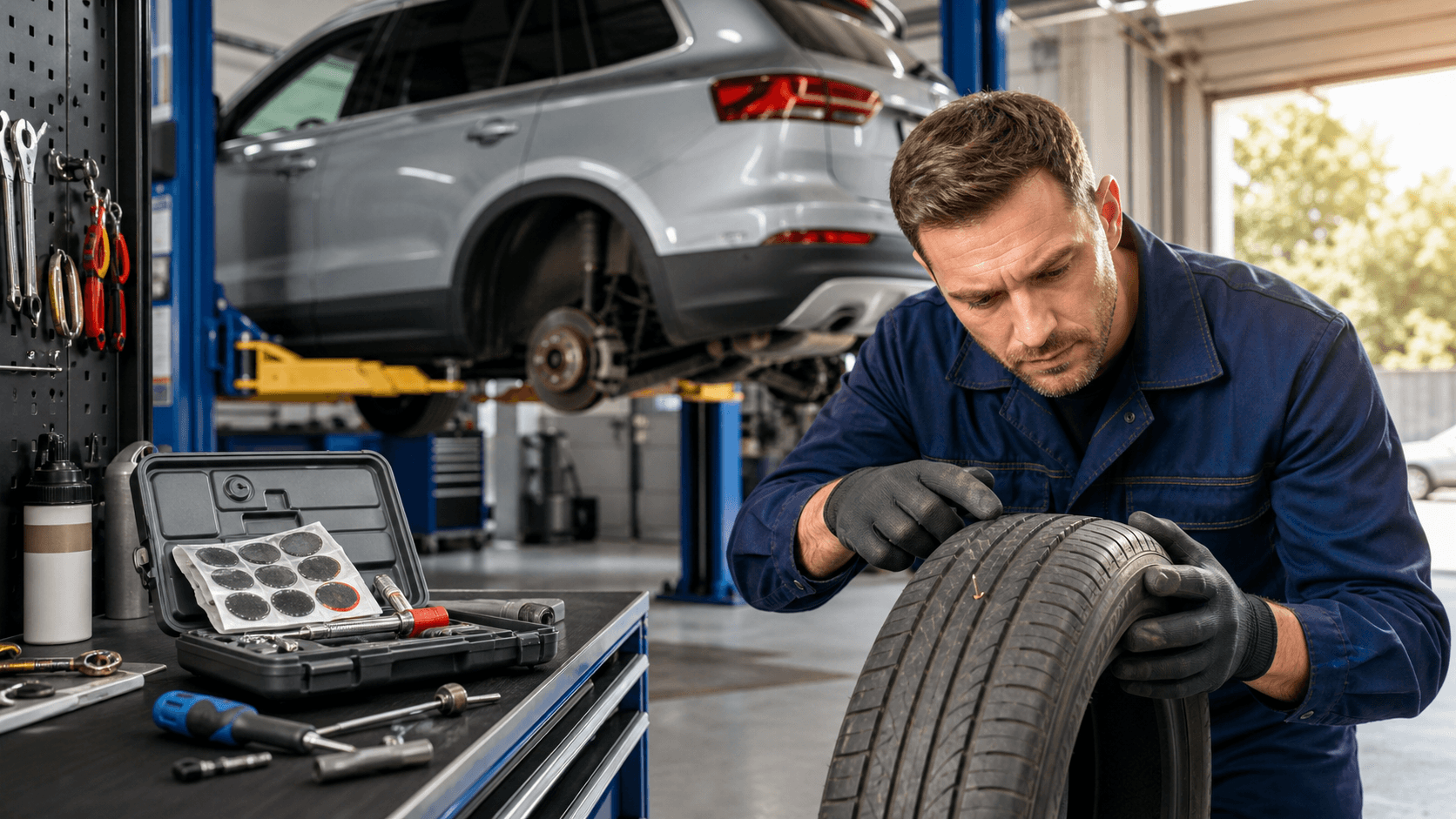
A quality tire repair starts with a full inspection, not just a quick plug from the outside. The usual process looks like this:
- Vehicle check-in and short conversation about what happened
- Remove the wheel and tire from the vehicle
- Inspect the outside and inside of the tire for damage
- Find the leak using water, soapy solution, or other tests
- Check the wheel, valve stem, and bead area
Looking inside the tire matters because you cannot see heat damage or internal splits from the outside. Driving on a low or flat tire for even a short distance can harm the inner liner and cords.
Once the tire is cleared for repair, an industry-approved patch-plug combination is installed from the inside. The process includes:
- Cleaning and prepping the damaged area inside the tire
- Drilling or reaming the puncture to the correct size for the plug
- Applying special materials that bond the patch to the inner liner
- Sealing everything so air and moisture stay out
This method helps restore the tire's integrity and reduces the chance of future leaks from the same spot. It is very different from a quick roadside plug.
Many shops will also look for things that may have caused uneven wear or repeated flats, such as alignment issues, worn suspension parts, or incorrect tire pressure. Fixing these problems helps the repair last longer.
Timing is often better than people think. A single professional tire repair usually does not take very long, and same-day service is often possible, especially for a simple puncture. It is smart to deal with slow leaks before you plan long road trips or hit a stretch of stormy weather. While the tire is off, it can be a good time to handle other services like rotations or an oil change.
Save Money Without Sacrificing Safety
Repairing a tire costs less than replacing one, especially when you compare it to buying two or four new tires at once. A timely repair can stretch the life of a relatively new tire and put off that big expense for a while.
Pairing repairs with regular care helps your tires last longer:
- Tire rotations to keep wear more even
- Wheel alignments to prevent edge wear
- Checking tire pressure
- Occasional visual inspections for nails, screws, or side damage
Sometimes a partial replacement still makes sense. If three tires are in good shape and one is damaged beyond repair, replacing just that one may be fine, depending on tread depth and vehicle type. Other times, especially on all-wheel-drive or high-performance vehicles, matching tread and design across the axle or full set is better for handling and drivetrain parts.
Honest advice matters here. The goal should be safe driving and long-term value, not just selling more tires.
For Oregon drivers, it helps to think about seasons. Planning repairs or replacements before steady rains or mountain trips gives you more choices and less stress. Regular tire checks keep you from getting stuck with a surprise flat on the shoulder of I-5 or on a dark country road.
Tire Repair FAQs for Sutherlin Drivers
Pricing and value questions are common. Tire repair at a professional shop typically costs less than replacement, but there is a point where putting money into a very old, worn tire is not smart. Extra steps like tire balancing or valve stem replacement may be added if they are needed for a safe fix.
Time and convenience matter too. A standard tire repair is usually a short visit and can often be done while you wait. For more complex situations or busy days, dropping off the vehicle may be easier. Calling ahead can help, but many shops can still work in a flat or slow leak as soon as possible.
Common symptoms that you may need tire repair in Sutherlin include:
- Low tire pressure light that keeps coming back
- Vibration or thumping that was not there before
- Vehicle pulling to one side
- A tire that needs air more than usual
Driving on a tire that keeps losing air is risky. Slow leaks can suddenly get worse, and running low on air can damage the tire from the inside. If the tire looks very low, has a big cut, or you see exposed cords, it is safer to call for a tow than to drive on it.
For maintenance, it is smart to:
- Check tire pressure at least once a month
- Look at tread depth a few times a year
- Rotate tires based on your service schedule
- Avoid potholes and road debris when you can
Repair limits are real. There are only so many times the same area can be fixed safely, and punctures too close to the sidewall or shoulder are usually not repairable. When done correctly, a repaired tire can be driven at normal highway speeds.
Trucks, SUVs, diesel work vehicles, and European models follow the same basic repair rules, but load, speed, and drivetrain can affect the best choice between repair and replacement. Run-flat and low-profile performance tires can sometimes be repaired, but only if the damage, tire design, and how long they were driven while low all check out under a careful inspection.
Get Reliable Tire Service That Keeps You Moving
When you need fast, accurate tire repair in Sutherlin, our team at Over the Hill Auto is ready to get you safely back on the road. We carefully inspect your tires, identify the real cause of the problem, and explain your options so you can make a confident decision. To schedule service or ask a question, simply contact us and we will help you line up a time that works for you.