Emergency Roadside Triage in Sutherlin
When your car suddenly acts up on I-5, Highway 138, or a quiet back road near Sutherlin, you usually get only a few seconds to make good choices. What you do in that short time can protect your family, protect other drivers, and keep a small problem from turning into major emergency auto repair. That is what roadside triage is all about.
In our area, long stretches between services, summer heat on the pavement, wildfire smoke, and heavy travel can make a breakdown feel even more stressful. With a simple plan in your head, you can stay calmer, make a safe stop, do a few quick checks, and decide if the car can limp to safety or if you should shut it off and wait for a tow.
At its core, roadside triage follows three steps:
- Protect people first
- Prevent more damage second
- Decide your next move last
Let's walk through how to do that in real life along the roads around Sutherlin and Douglas County.
How to Make a Safe Stop
Most breakdowns give you at least a hint before things fully fail. Pay attention if you notice:
- New warning lights on the dash
- Loss of power when you press the gas
- Strange grinding, knocking, or squealing
- Steam or smoke from under the hood
- Burning smells or strong fuel odors
- Sudden change in steering or braking feel
The moment something feels wrong, ease off the gas and plan your escape. Do not slam on the brakes unless you must. Instead:
- Signal early so drivers behind you know you are slowing.
- Move to the right shoulder, a wide turnout, or a side road if one is close.
- Avoid stopping in blind curves or right after hills where you are hard to see.
- Turn on your hazard lights as you slow to a stop.
- Once stopped, shift into park and set the parking brake.
It is usually safer to keep everyone inside the vehicle with seat belts on, especially on I-5 with fast traffic, unless there is smoke, fire, or you are in a dangerous spot. If you must get out, exit on the side away from traffic.
To make your vehicle more visible:
- Keep hazard lights on
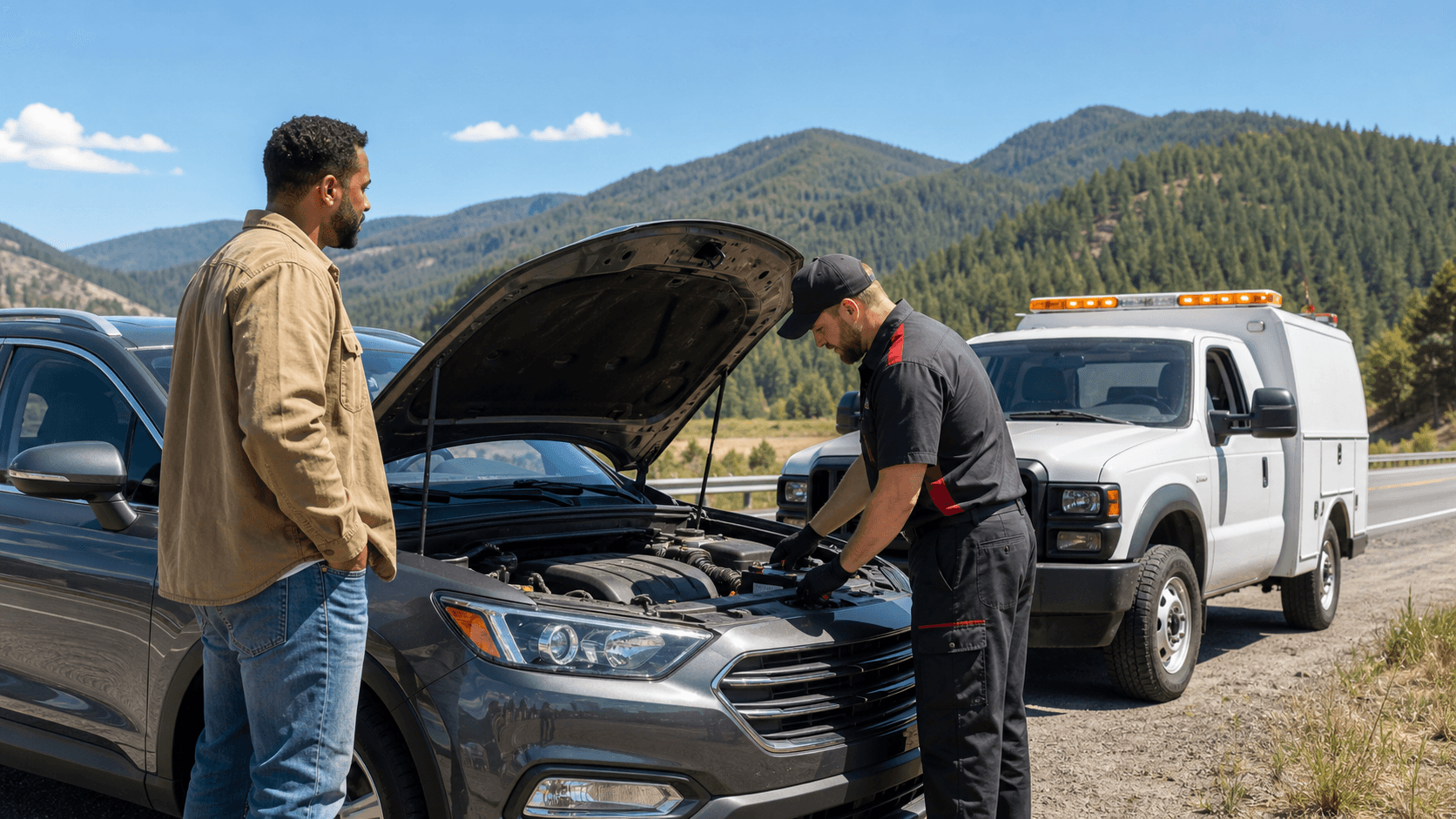
- If it is safe, pop the hood so the car looks clearly broken down
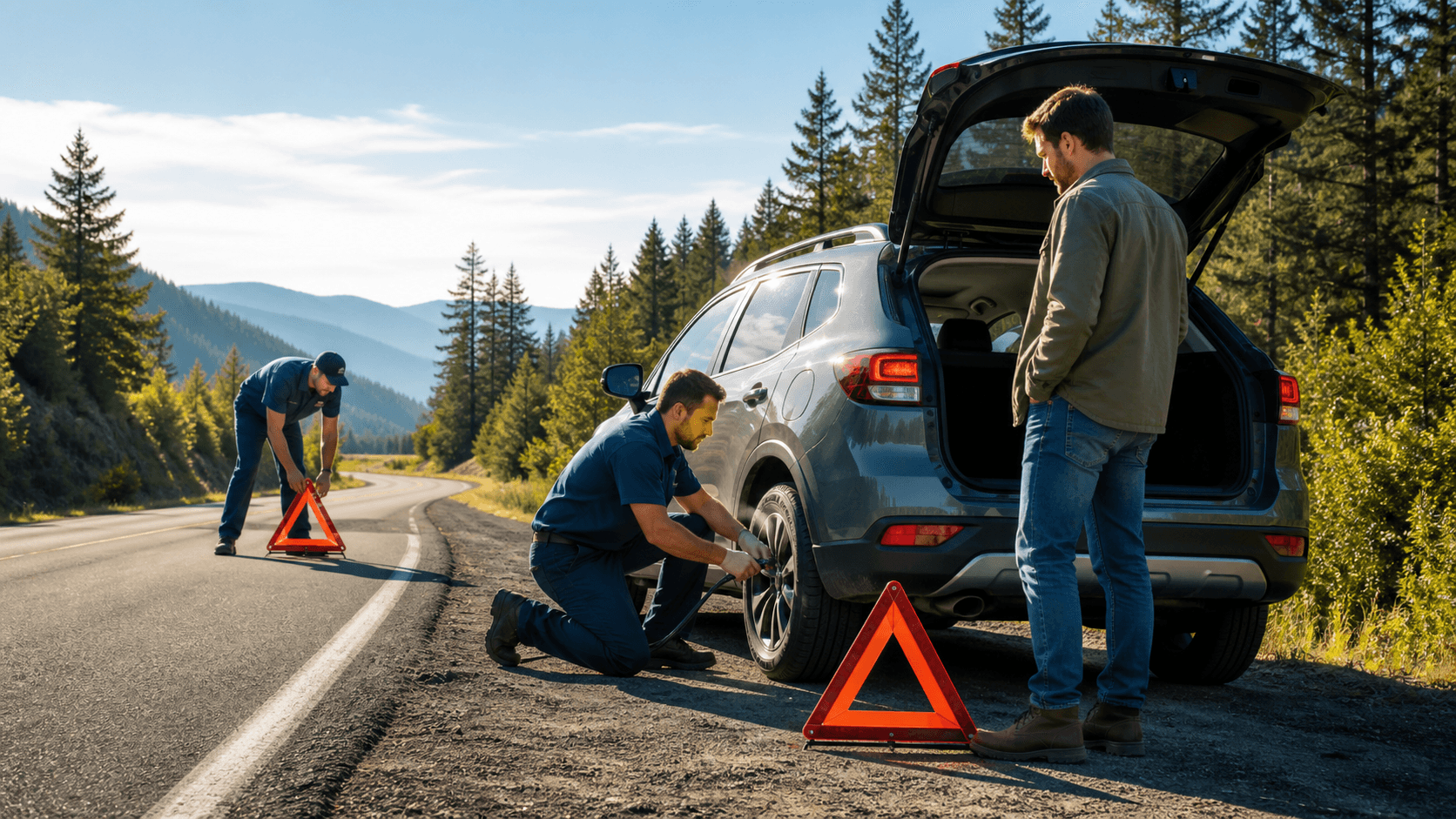
- Use reflective triangles or flares, placing them behind the car on the shoulder
- Stand well off the traffic side, behind a guardrail or far from the lane if you can
Your first goal is to make sure no one hits you while you figure out what is going on.
Simple Checks You Can Do Safely
Once you are safely stopped and calm enough to think, you can do a few quick checks without tools or special skills. Do not open any caps or touch hot or moving parts.
From outside the car, look for:
- Fresh puddles or drips under the engine area
- Shredded belts or obvious dangling parts you can see from the front
- Severe leaks spraying or pouring from under the car
Pay attention to smells:
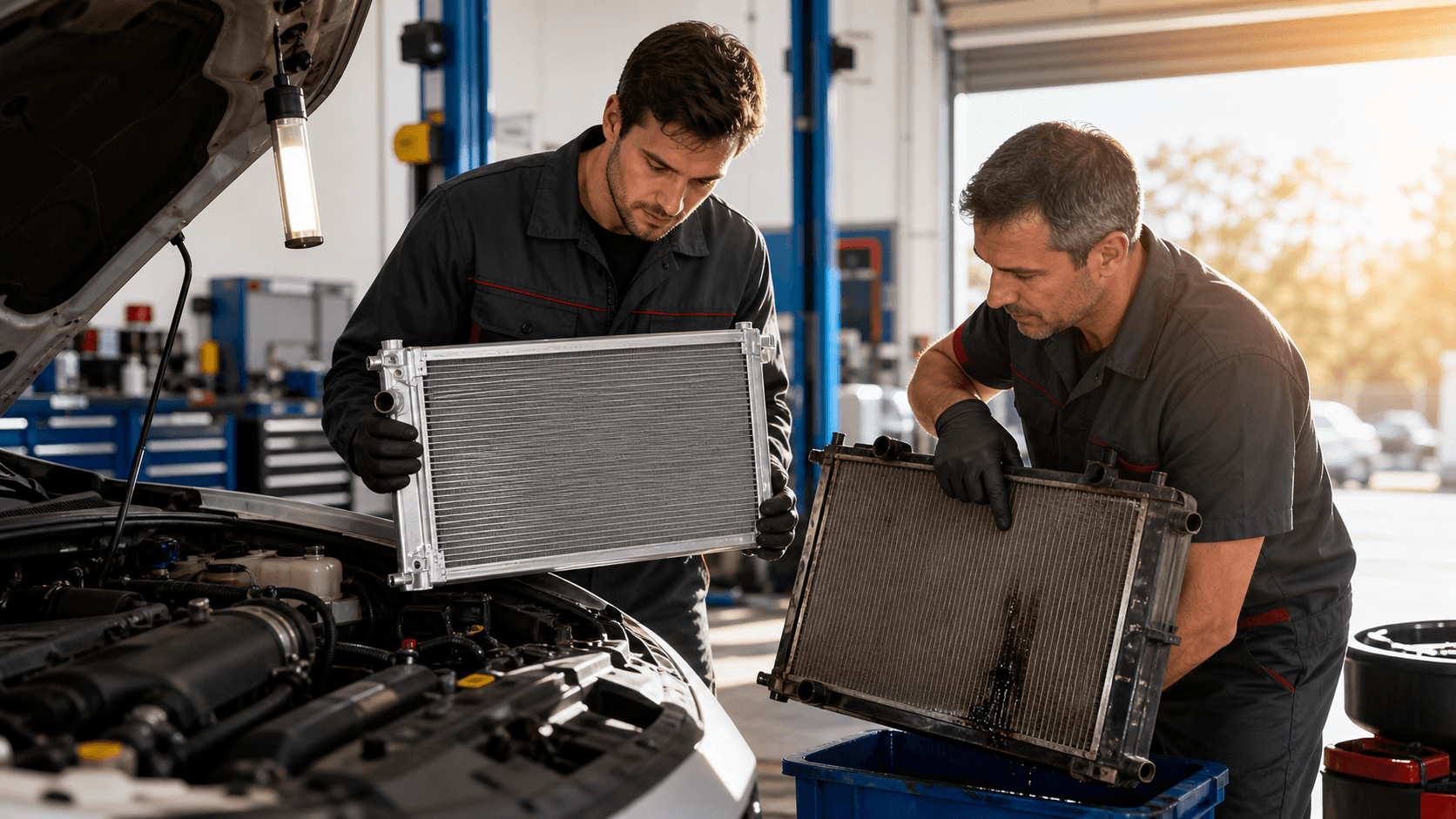
- Sweet, hot smell may point to leaking coolant
- Burning rubber may be a belt or a tire issue
- Strong fuel smell can mean a fuel leak; do not light anything near the car
From the driver seat, read your gauges and warning lights:
- Temperature gauge: If it is climbing close to the red or already there, that is serious.
- Red oil pressure light: This usually looks like an oil can and often means very low oil pressure.
- Battery/charging light: Can mean the alternator or charging system is failing.
- Other warning lights: Engine, ABS, and others are clues to what failed.
If everything seems mild, and the engine is not overheating or knocking, you might be able to nurse the car off the highway or to the next safe pullout by:
- Turning off the AC to reduce load on the engine
- Switching off extra electrical items like rear defroster, stereo, and extra lights
- Driving slowly along the shoulder or in the right lane with hazards on
If any severe symptom appears while doing this, stop again and go to shut-down mode.
When You Must Shut the Engine Off
There are times when the best way to avoid major emergency auto repair is to stop driving right away. You should shut the engine off immediately if you notice:
- Red oil pressure light staying on
- Temperature gauge racing into the red
- Steam pouring from under the hood
- Loud knocking, clunking, or metal-on-metal sounds from the engine
- Strong raw fuel smell around the vehicle
- Visible flames or heavy smoke from the engine bay
Driving through these signs can cause:
- Warped cylinder heads or blown head gaskets from overheating
- Seized engines from oil loss
- Ruined transmissions if fluid is gone
- Damaged catalytic converters from misfires or raw fuel
Those kinds of failures can turn a small leak or minor part issue into a full engine or transmission replacement.
If you shut the car down:
- Shift into park and set the parking brake.
- Leave the hood closed if you see smoke or suspect fire risk.
- Never open a hot radiator cap; it can spray boiling coolant.
- Move passengers to a safer place, well away from traffic, if it is safe to exit.
Once the car is off, do not try to restart it just to "see if it will go." Waiting for a tow is frustrating, but it often saves thousands in repairs.
Calling for Help and Planning Your Next Steps
Before you call anyone, gather a few key details. This will make the call shorter and the help better:
- Exact location: mile marker, closest exit, crossroads, or landmark near Sutherlin, Winchester, or Roseburg
- Vehicle details: year, make, model, and whether it is gas or diesel
- What happened: sounds, smells, smoke, loss of power, any fluid seen
- Dash info: which warning lights are on and where the temperature gauge stopped
- Safety risk: are you blocking a lane or in a tight shoulder?
You should call 911 if:
- Your car is on fire or smoking heavily
- There has been a crash or someone is hurt
- You are blocking a travel lane or stuck in a live lane with no safe shoulder
If you are off to the side and safe, roadside assistance or a tow service is usually enough.
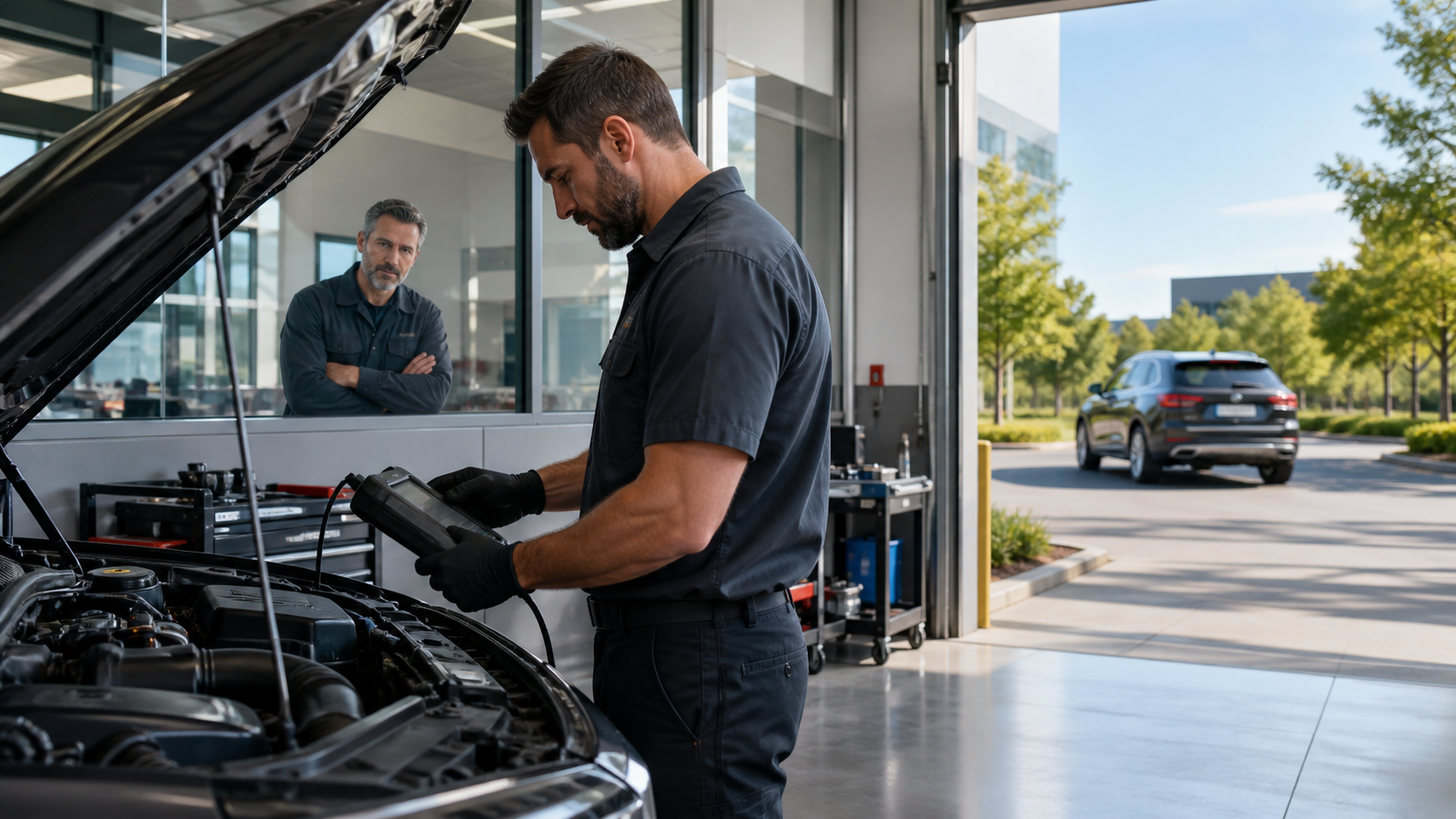
Once your car is towed to a shop, clear information about what you saw and felt helps the technicians start with a good guess. At Over the Hill Auto, we use that description along with advanced diagnostics to track down problems on gas, diesel, and many European vehicles. If your car is covered by a NAPA AutoCare warranty, that can also help with repairs in some cases.
Sutherlin Driver FAQ and Smarter Next Steps
Drivers around Sutherlin often ask the same questions after a roadside scare, so here are straight answers to the most common ones.
How Much Does Emergency Roadside Triage and Repair Usually Cost?
Costs can vary a lot based on what actually failed, but here is what to expect:
- Towing: Local tows are often billed by the mile plus a hookup fee. Your roadside assistance or insurance may cover part or all of this.
- Initial diagnostic check: Many shops charge a flat diagnostic fee to inspect the vehicle and scan for codes.
- Minor fixes: Simple issues like loose battery connections, small coolant hose leaks, or minor belt concerns are usually on the lower end of repair costs.
- Major failures: Engine, transmission, or complex electronic problems can be significantly more expensive and may require ordering specialized parts.
We can provide a written estimate after we inspect the vehicle so you know the likely total before repairs begin.
How Long Do Roadside-Related Repairs Usually Take?
Timing depends on:
- How deep the problem goes inside the engine, transmission, or electronics
- How quickly parts can be sourced for your vehicle
- Whether the failure caused more internal damage
- Any special setup time for diesel or European systems
As a rough guide:
- Basic inspections and simple repairs can sometimes be completed the same day or within 24 hours.
- Cooling system, brake, or charging system repairs may take one to two days, depending on parts.
- Engine, transmission, or advanced diagnostic work can take several days or longer if specialty parts are back-ordered.
Warning Signs That Mean Go Straight to a Shop, Don't Wait
You should schedule service as soon as possible if you notice:
- Slow cranking or hard starts, especially when hot
- Any sign of intermittent overheating or unexplained coolant loss
- Transmission slipping, delayed shifting, or flaring RPMs
- Squealing or grinding brakes, or a soft brake pedal
- Repeated check-engine light, especially if it flashes
Treat these as early warnings and get to a shop before you face a full roadside breakdown.
What Symptoms Mean I Should Stop Driving Right Away and Call for Help?
Pull over safely and shut the engine off if you notice:
- Red oil pressure light staying on
- Temperature gauge in the red or steam from under the hood
- Loud knocking, clunking, or metal-on-metal sounds from the engine
- Strong raw fuel smell, visible fuel leaking, or visible flames
- Brakes that suddenly feel very soft or fade badly
In these cases, it is safer and cheaper long-term to stop and call for a tow than to keep driving.
What Maintenance Helps Avoid Roadside Emergencies, and How Often Should I Do it?
Regular maintenance greatly lowers your chances of getting stuck on the side of the road. General guidelines include:
- Oil and filter changes: Typically every 3,000, 5,000 miles for conventional oil or 5,000, 7,500 miles for synthetic, or as recommended by your manufacturer.
- Cooling system checks: Have coolant level and condition checked at every oil change and ask for a full cooling system inspection at least once a year or before long trips.
- Battery and charging system tests: Once a year, and before summer heat or long travel. Replace older batteries (around 4, 5 years) proactively.
- Brake inspections: At least once a year, or any time you hear squealing or grinding, feel pulsing, or notice longer stopping distances.
- Tires: Check pressure monthly and before trips; rotate about every 5,000, 6,000 miles and replace when tread is worn.
- Diesel and European systems: Follow the manufacturer's service schedule for filters, fluids, and specialized inspections.
When to Seek Service After a Roadside Scare if It Drives Fine Again?
You should book an appointment soon if:
- You had overheating that went away after cooling down.
- A warning light came on and then went off on its own.
- You smelled burning or fuel but do not see an active leak now.
- The car feels different, rough idle, new vibration, new noise, even if it still runs.
Hidden damage can remain after a brief incident, so having a technician inspect it helps prevent a repeat breakdown.
When Does a Local Sutherlin Shop Make Sense After a Tow?
A full-service NAPA AutoCare Center in town can be a good fit if you want:
- Diagnostics for gas, diesel, and many European vehicles in one place
- Help working with NAPA AutoCare warranties
- People who know local driving conditions like steep grades, summer heat, and wildfire season
- Support if you are traveling through and may need help with follow-up on your route
Any roadside scare is a good warning sign. If your car has scared you once, it is time to get it checked, fix the root cause, and think about a simple roadside kit with water, safety gear, phone charger, and a card with your preferred shop and towing company so you are ready for the next long drive.
Get Back On The Road With Fast, Reliable Help
When your car breaks down unexpectedly, you do not have time to wait around for guesswork. At Over the Hill Auto, we provide thorough diagnostics and trusted emergency auto repair so you can get moving again with confidence. If you are stuck, worried about a new noise, or unsure if it is safe to drive, reach out and let our team walk you through the next steps. Call or contact us now so we can prioritize your vehicle and restore your peace of mind.