Keep Your Summer Road Trip Moving with a Strong Battery
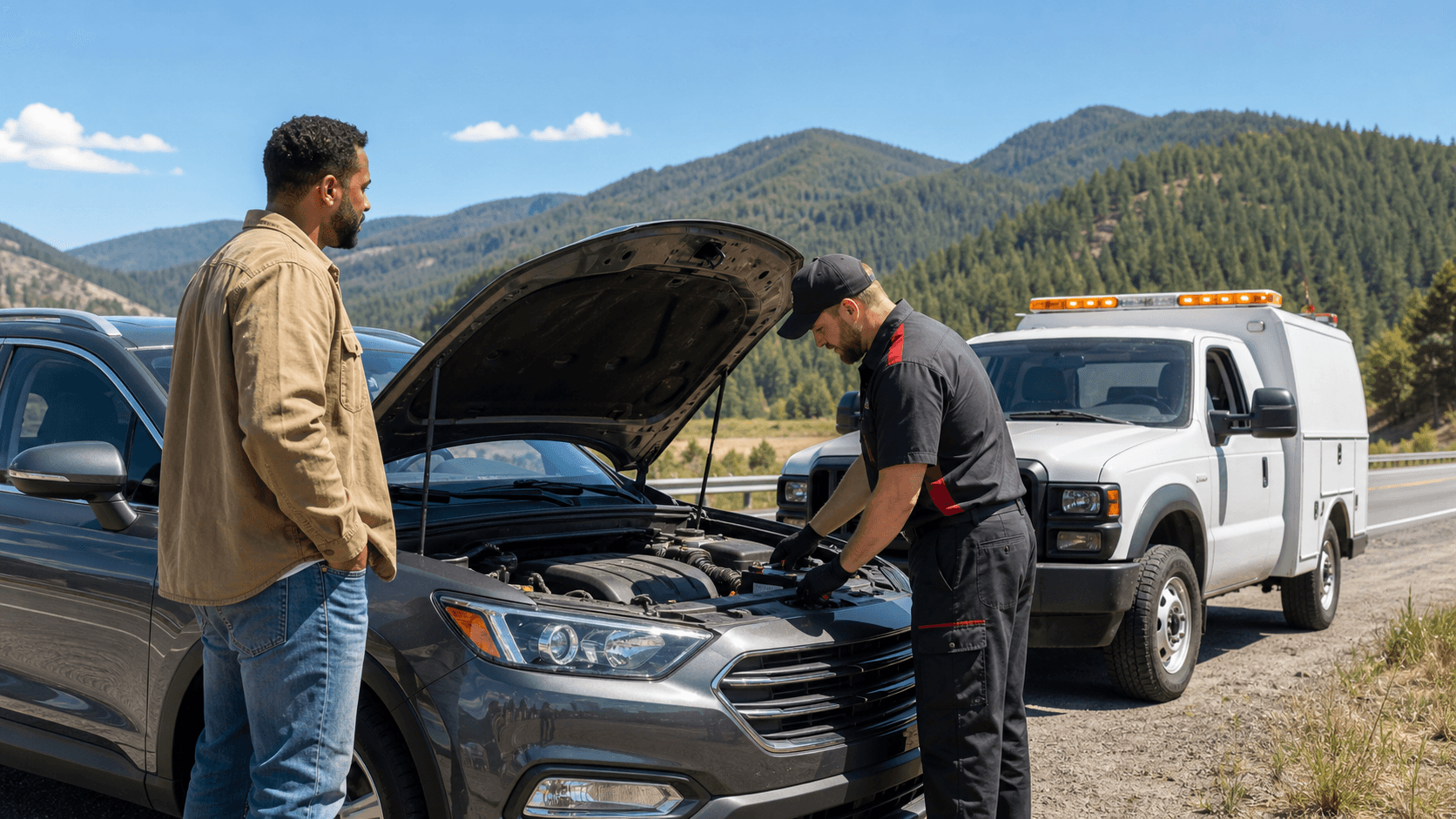
A weak battery can turn a fun summer drive into hours sitting on the side of the road waiting for help. Hot weather, slow traffic, and lots of stops all make your battery work harder. When you add phone chargers, AC on high, and maybe a plug-in cooler, your electrical system is under a lot of strain.
Long drives in summer heat are tough on every part of the starting and charging system. If your battery or alternator is already weak, that can be enough to push it over the edge. With a little prep, you can greatly cut the odds of needing emergency car battery replacement halfway through your vacation.
In this guide, we will walk through a simple battery prep checklist for long summer drives. We will talk about spotting weak batteries, basic alternator and parasitic draw tests, cleaning terminals, and choosing the right battery size, cold cranking amps, and reserve capacity for your vehicle and your travel plans.
Spot Weak Batteries Before You Hit the Highway
Your car usually gives small hints before the battery completely fails. Some common signs include:
- Slow cranking or the engine turning over longer than normal before it starts
- Headlights or dash lights that dim at stoplights but brighten up when you rev the engine
- A rapid clicking sound when you turn the key or push the start button
- Battery or charging warning lights that come and go
- Intermittent no-starts after short stops for gas or snacks
If you notice one or more of these, it is smart to get things checked before you pack the car. Waiting often leads to a surprise breakdown at the worst time, like at a crowded rest area or a hot parking lot far from home.
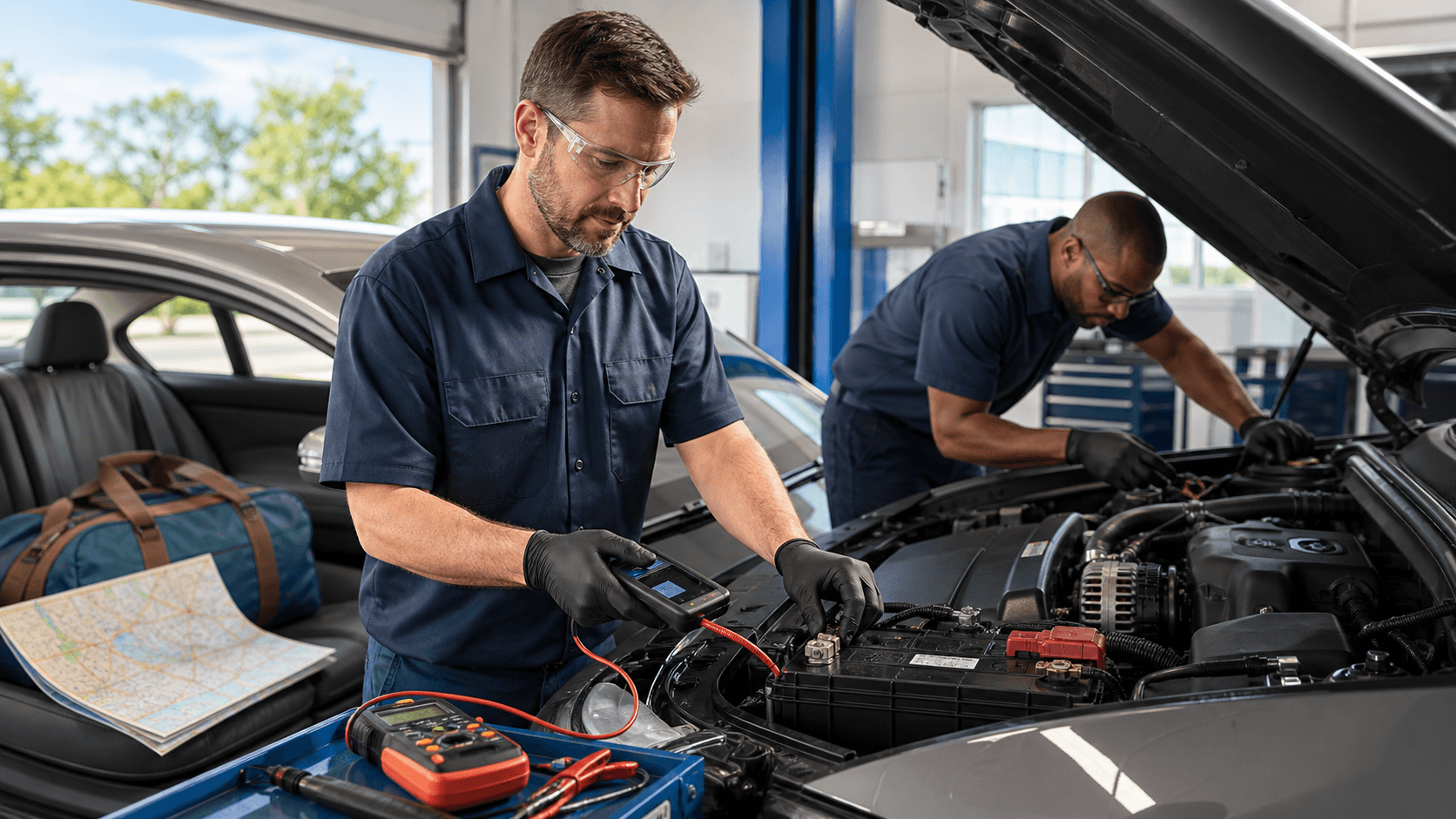
Professional testing is the safest way to know if you need car battery replacement or some other repair. A good shop will not just look at voltage. They will:
- Test the state of charge to see how full the battery is
- Test the state of health to see how much life is left in the battery plates
- Run a load test that checks cold cranking amps while the battery is under strain
Age and driving habits play a big part in battery life. Lots of short trips, sitting for long periods, and high under-hood temperatures all shorten the lifespan. For many drivers, three to five years is the usual window before it makes sense to replace a battery ahead of a long trip, even if it has not completely failed yet.
Test Alternator Output and Parasitic Draw at Home
Your alternator keeps the battery charged while you drive. If it is weak, your battery may seem bad when it is really just undercharged. With a basic multimeter and care, you can do a simple check at home.
A basic alternator output check looks like this:
- With the engine off, check resting battery voltage
- Start the engine and check voltage at idle
- Turn on high electrical loads like headlights, AC, and rear defroster, then check voltage again
Healthy charging voltage usually reads higher with the engine running than with the car off. If the reading hardly changes, suddenly drops, or jumps around a lot, that can point to a charging problem that needs professional diagnosis.
Parasitic draw is a different issue. It is the small amount of current that flows when the car is off. Some draw is normal because computers, clocks, and security systems still need power. Too much draw can drain a healthy battery overnight or between stops on a road trip.
A basic parasitic draw check often involves:
- Making sure the car is off, doors closed, and lights off
- Connecting a meter in the correct way to measure draw
- Waiting long enough for modules to go to sleep
- Carefully pulling fuses one at a time to see which circuit drops the draw
Modern vehicles are sensitive, so it is easy to damage electronics or wake up control modules if you are not careful. If readings are confusing, if you see sparks, or if any warning lights start acting strange, stop testing and have a professional perform a full charging system and parasitic draw diagnostic.
Clean Battery Terminals for Strong, Reliable Connections
Even a healthy battery and alternator can struggle if the battery connections are dirty or loose. Corrosion, that white or green crust on the posts and terminals, builds up faster in heat and moisture. It adds resistance, which steals power and can cause hard starting or low voltage codes.
A quick cleaning checklist looks like this:
- Park safely, set the parking brake, and make sure the engine is off and cool
- Disconnect the battery, always removing the negative cable first, then the positive
- Inspect cables and clamps for damage, cracks, or swelling
- Use a battery cleaning brush with a baking-soda-and-water mix or a battery cleaner to scrub posts and terminals
- Rinse and dry carefully, keeping liquids away from electronics
When you reconnect, attach the positive cable first, then the negative, and snug the clamps so they do not move. A light coat of dielectric grease or a battery corrosion spray on the outside of the terminals helps slow new buildup and keeps the connection solid for long drives.
While you are there, look closely at the battery case and cables. Swelling, cracks, leaks, or soft spots in the case are all red flags. Frayed or broken cables, or terminals that will not tighten, also mean it is time for a professional to look things over and talk with you about car battery replacement or cable repair.
Choose the Right Battery CCA and Reserve Capacity for Summer
When most people think about batteries, they focus on cold cranking amps, or CCA. That rating tells you how much power the battery can deliver to start the engine in cold weather. It is important, especially in winter, but long summer drives put more focus on another rating: reserve capacity.
Reserve capacity is how long the battery can supply power if the alternator is not keeping up, like in slow traffic with the AC on high and lots of accessories running. On a road trip, strong reserve capacity helps support:
- AC blower motors
- Headlights and interior lights
- GPS, chargers, and plug-in coolers
- Trailer brakes and tow accessories
To choose the right battery, you want:
- The correct group size so the battery fits and the terminals line up
- CCA that meets or slightly exceeds what the vehicle maker recommends
- Healthy reserve capacity, especially if you have added electronics or tow in hot weather
Sometimes a proactive car battery replacement before a big summer trip is worth it for peace of mind, even if the old battery still works on mild days. Matching the battery to your vehicle, local climate, and how you drive helps you avoid a lot of headaches.
Summer Road-Trip Battery FAQ for Sutherlin Drivers
Car Battery Replacement Cost: Typical Price and Key Factors
Most Sutherlin drivers can expect a standard car battery replacement to fall in a moderate price range, depending on battery type, size, and warranty. Premium AGM or high-capacity batteries and vehicles with difficult access or reset procedures will be on the higher end. The final cost usually includes battery testing, the new battery, installation, and recycling of the old one. Extra repairs, like replacing badly corroded terminals or damaged cables, can add to the total.
How Long Does a Battery Test and Replacement Usually Take, and Can it Be Done While I Wait?
A basic battery and charging system test often takes around 15, 30 minutes. If the battery needs to be replaced and access is straightforward, the full visit is commonly completed within about an hour. More in-depth diagnostics or wiring and alternator repairs can take longer. In most cases, a standard battery test and replacement can be done while you wait.
Signs Your Battery or Alternator May Fail on a Summer Road Trip
Slow cranking, dim or flickering lights, warning lights that come and go, burning smells near the alternator, or intermittent no-starts are all early warnings. You should schedule service as soon as you notice any of these symptoms, especially before a long trip, rather than waiting to see if they get worse.
Car Battery Replacement: Long Drives/Towing & Oregon Climate Impact
For many drivers, a three- to five-year interval is typical. If you tow, frequently run accessories, or drive in hotter parts of Oregon, planning on replacement closer to the three-year mark can prevent surprise failures. Milder coastal and valley temperatures may let some batteries last longer, but heavy summer use still shortens overall lifespan.
When Is It Safe to DIY Terminal Cleaning and Voltage Tests?
It's usually safe to do basic visual checks, gently clean light corrosion, and take simple voltage readings as long as you follow safety instructions and disconnect the battery correctly. Stop DIY work and contact a professional if you see heavy or repeated corrosion, damaged or melted cables, swelling or leaks in the battery case, confusing meter readings, sparking, or new dashboard warning lights.
When to Seek Immediate Battery or Charging System Service
Seek service right away if your vehicle will not start without a jump, cranks very slowly, shows a battery or charging warning light that stays on, or repeatedly loses power after short stops. Also, do not delay if you smell burning plastic or see smoke from the engine bay, as this can indicate a serious alternator or wiring problem.
Battery Service Warranty: Is It Honored Out of State?
Many quality shops offer warranties that cover both the battery and the installation. These warranties often range from limited one-year coverage up to several years, depending on the battery. Many programs are supported by nationwide networks, so if your battery fails while you are traveling, you can usually have it tested and serviced at a participating shop outside Oregon.
Can a Parasitic Draw Drain a New Battery? Common Causes
Yes. A strong or abnormal parasitic draw can drain even a brand-new battery in hours or days. Common sources include alarms, remote start systems, keyless entry modules, aftermarket audio or lighting, dash cameras, and accessories that stay powered when the ignition is off. Faulty switches or control modules that don't go to sleep can also create excessive draw.
Battery or Alternator, Starter, or Wiring: Diagnosis Tests
The only reliable way to tell is with proper testing. A technician will typically check battery state of charge and health, measure alternator output under different loads, test starter current draw, and inspect wiring and grounds for damage or high resistance. Based on these results, they can tell you whether you need a new battery, alternator, starter, wiring repair, or a combination of services.
How to Maintain My Battery Between Trips for Maximum Life
Drive your vehicle long enough for the alternator to fully recharge the battery, avoid leaving lights or accessories on with the engine off, and keep terminals clean and tight. If your vehicle sits for extended periods, ask about a battery maintainer or tender to keep it at a healthy state of charge. Regular inspections before and after heavy summer use help catch issues early.
Get Reliable Power Back On The Road Today
If your car is slow to start or showing warning signs, we can help you with fast, accurate car battery replacement that keeps you moving. At Over the Hill Auto, we test your system, install the right battery, and make sure everything is safely connected before you leave. Reach out to our team with any questions or to schedule your service through our contact page.