Stop Topping Off and Start Protecting Your Engine
If your coolant light keeps coming on and you just keep adding more, something is wrong. Coolant is not like gas. It should not disappear quickly. When it does, there is usually a leak that needs real repair, not just another refill.
Ignoring a coolant leak can turn a simple fix into a major engine problem. Low coolant lets heat build up, which can lead to overheating, warped parts, and even a blown head gasket. That risk grows when summer hits Sutherlin and the rest of Douglas County, especially with hotter days, long drives, and towing.
In this guide, we will explain how to tell when a coolant leak needs attention right away, what warning signs matter most, and what happens during professional coolant leak repair. We will also cover simple checks you can do and common questions drivers in our area ask about cooling system problems.
Warning Signs a Coolant Leak Is More Than a Nuisance
A coolant leak often gives you some hints before things get serious. Some signs you should not ignore include:
- A sweet, syrup-like smell from the engine bay
- Colored puddles under your car (green, orange, or pink)
- Steam or vapor from under the hood
- The temperature gauge creeping higher than normal
- The heater or AC starting to act strange
Many people think a slow leak is no big deal because they only add a little coolant at a time. But small leaks add up. As coolant leaks out, air gets pulled into the system. Those air pockets can create hot spots inside the engine where metal is not cooled well. Over time, that heat can warp cylinder heads, damage gaskets, and cause real trouble.
It is important to know when it is not safe to keep driving. You should treat it as unsafe to drive if:
- Your engine overheats more than once
- The coolant light stays on even after you add coolant
- You see thick white smoke from the exhaust
- Your oil looks milky or foamy on the dipstick
Those last two signs can point to internal engine damage, which needs attention right away.
When You Need Coolant Leak Repair Instead of a Refill
A very small amount of coolant loss over a long period can be normal, like needing a slight top-off after a long time. But if you are adding coolant often, or the level drops quickly, that is not normal and usually means you have a leak.
Here are signs you need coolant leak repair, not just a refill:
- Coolant hoses that are cracked, swollen, or wet
- A radiator with damp spots, rust, or visible seepage
- Coolant on or around the water pump area
- Foggy windows and a sweet smell inside the cabin from a heater core issue
- Bubbles in the coolant or rapid loss that could point to a head gasket problem
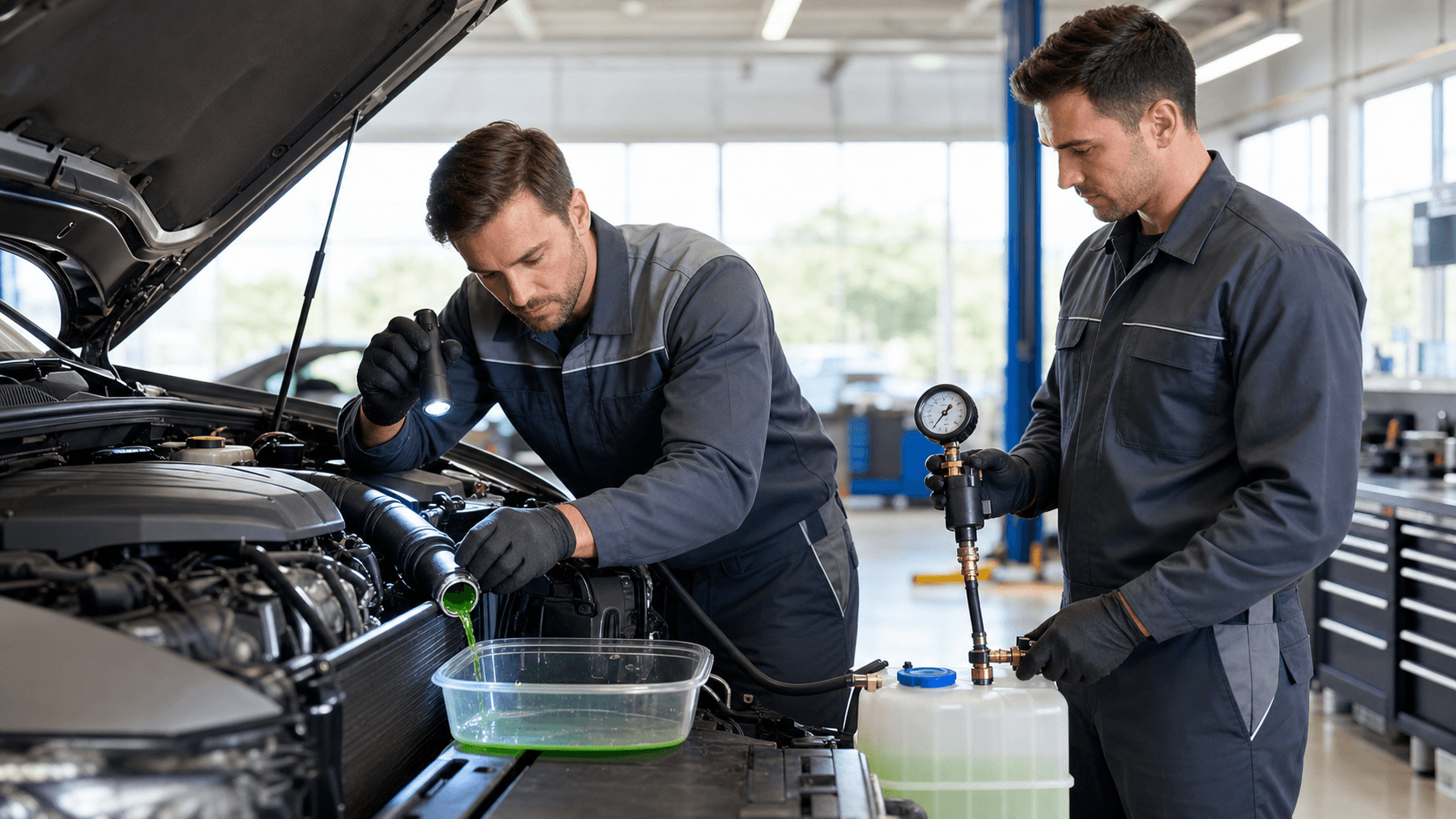
At a professional shop, technicians use several methods to find leaks. For example, we might:
- Pressure test the cooling system to see where coolant escapes
- Check the radiator cap to be sure it holds the right pressure
- Inspect belts and the water pump area for seepage or bearing play
- Use dye or electronic tools to track down hidden or very small leaks
This kind of testing helps us find the true source of the leak instead of guessing.
What to Expect From Professional Coolant Leak Repair
When you bring a vehicle in for a suspected coolant leak, the process usually follows a few basic steps.
First, there is a visual inspection and a pressure test of the cooling system. That helps confirm you actually have a leak and shows how fast the system loses pressure. Once the leak shows up, the technician tracks down the exact part that is failing, whether it is a hose, clamp, radiator, water pump, heater core, or gasket.
Next comes repair planning. You should expect:
- A clear explanation of what is leaking and why
- Repair options if there is more than one way to address the problem
- Information about what other parts might be affected or should be checked at the same time
After the repair, the system is refilled with the correct type of coolant and carefully bled to remove air pockets. This step matters a lot, because trapped air can cause hot spots and new overheating problems even after the leak is fixed.
Time in the shop depends on what failed. A simple hose or clamp may be handled in a short visit. Replacing a radiator, water pump, or chasing a hard-to-find internal leak usually takes longer. At Over the Hill Auto, our technicians use quality parts through our NAPA AutoCare and AutoZone ProVantage programs, and repairs are backed by a nationwide warranty so you are covered even when you travel.
Summer Cooling System Prep for Sutherlin Drivers
Warm weather, steep grades, and extra weight from towing or RV trips all put more strain on your cooling system. That is why early summer is a smart time to have your system checked before you head over the passes or spend hours on I-5 in traffic.
Good cooling system maintenance usually includes:
- Regular checks of coolant level and condition
- Periodic coolant flushes to remove old, rusty, or contaminated fluid
- Annual inspection of hoses, clamps, radiator, water pump area, and belts
There are also simple checks you can do as an owner between visits:
- Watch your temperature gauge and warning lights while driving
- When the engine is completely cool, look at the coolant level in the overflow tank
- Look for green, orange, or pink drips on your driveway or parking spot
- Pay attention to new smells, steam, or changes in heater and AC performance
If anything seems off, it is much safer to have a professional look at it before a short concern turns into a roadside breakdown.
Coolant Leak Repair FAQs for Sutherlin and Douglas County
How much does coolant leak repair usually cost?
Costs vary a lot based on what failed and what type of vehicle you drive. A simple hose or clamp issue is usually less involved than a radiator, water pump, heater core, or head gasket problem. At Over the Hill Auto, we inspect the vehicle and provide an upfront estimate before any work begins.
How long does coolant leak repair take?
Minor repairs like hoses or clamps can often be completed in a short visit. Larger jobs, like radiator or water pump replacement or diagnosing internal leaks, can take longer, especially if parts are harder to access.
Can I drive if my car has a coolant leak?
If the leak is small and your temperature stays normal, it may be safe to drive a short distance straight to a shop. If the engine starts to overheat, the coolant light stays on, or the level is very low, it is safer not to drive, because one serious overheating event can cause major engine damage.
What are the signs my coolant leak is serious?
Watch for:
- Recurring overheating
- Rapid coolant loss even after topping off
- Strong sweet odor, steam, or colored puddles
- White exhaust smoke or milky engine oil
Any of these should be checked as soon as possible.
How often should I check my coolant level and condition?
A quick visual check about once a month is a good habit, and a professional inspection at least once a year is smart, especially before long road trips or hot weather.
When should coolant be flushed or replaced instead of just topped off?
Coolant should be changed based on time and mileage intervals set for your vehicle. Signs you need a flush include rusty color, debris, or a thick, sludgy look. Fresh coolant helps protect against corrosion inside the radiator and engine and can help prevent future leaks.
What causes coolant leaks in the first place?
Common causes include age and wear, Oregon temperature swings, vibration, corrosion inside metal parts, failed gaskets, old coolant that has lost its protective qualities, and loose or defective caps and clamps.
Can I just use stop-leak products instead of real coolant leak repair?
Stop-leak additives might slow or hide a leak for a short time, but they can also clog small passages in the radiator, heater core, and other parts. On many modern vehicles with tight cooling system designs, that can create new problems, so professional repair is usually the better choice.
Is coolant leak repair covered by any warranty?
Qualifying cooling system repairs at Over the Hill Auto are backed by a NAPA AutoCare nationwide warranty, which gives you added peace of mind when you drive out of town.
Do you service all makes and models for coolant leak repair?
We work on most domestic and import vehicles. If you have an older or specialty vehicle, we can look at it and talk through the best options for your situation.
Keep Your Cool and Protect Your Engine
Coolant leaks rarely fix themselves. The longer you wait, the higher the risk of overheating, breakdowns, and expensive engine repairs. Catching a leak early and getting proper coolant leak repair keeps your vehicle safer, especially during hot weather, towing, and long trips around Oregon.
At Over the Hill Auto in Sutherlin, we help drivers stay ahead of cooling system trouble with clear diagnostics, upfront estimates, and repairs backed by a nationwide warranty. If you notice warning signs like frequent top-offs, rising temperatures, or coolant on the ground, it is time to have your system checked by our team.
Stop Coolant Leaks Before They Cause Costly Engine Damage
If you are seeing puddles under your car or your temperature gauge is creeping up, our technicians at Over the Hill Auto can pinpoint the issue and provide reliable coolant leak repair. We will inspect your cooling system, explain what we find in plain terms, and recommend only the work you truly need. To schedule an appointment or ask a question, just contact us and we will help you protect your engine and keep your vehicle running safely.