Quieter Drives in Sutherlin Start with a Healthy Exhaust
A loud exhaust can turn a normal drive around Sutherlin into something you have to talk over. Your exhaust system affects how loud your car is, how it smells, how it feels, and even how much fuel you burn on trips up and down I-5. When the system is healthy, the cabin is calmer, the fumes stay outside, and the engine can do its job more easily.
Winter rain, standing water, and road debris can speed up rust and wear under your car. Then, when the weather warms up and windows are down, that extra exhaust noise is a lot harder to ignore. That is where good muffler repair and exhaust service matter. A shop that understands diagnostics, gives upfront information, and fixes the actual cause of the noise can help you get back to a quieter, safer drive.
What Your Muffler and Exhaust System Really Do
Your exhaust system is more than just a pipe out the back. Several parts work together to move hot gases away from the engine and quiet things down:
- Exhaust manifold or headers that collect exhaust from the engine
- Catalytic converter that helps treat harmful gases
- Resonator on some systems to smooth out sound
- Muffler that reduces noise and vibration
- Exhaust pipes that connect everything front to back
- Hangers and mounts that hold the system in place
The muffler uses chambers, tubes, and packing material to cancel and absorb sound. When it is in good shape, engine noise is toned down before it ever reaches the tailpipe. The rest of the system helps control flow, manage heat, and keep gases moving so the engine does not have to work harder than it should.
A healthy exhaust system brings everyday benefits you can feel:
- Quieter rides around town and on the highway
- Less vibration through the floor and steering wheel
- Fewer fumes drifting near doors, windows, or vents
- Smoother-feeling power on long summer road trips
When parts are worn, damaged, or rusted, you lose those benefits and often get louder noise, odd smells, and a rougher drive instead.
Common Exhaust Noises and What They Mean
Different exhaust problems often come with different sounds. Paying attention to the type of noise can help point toward the cause.
Some common sounds include:
- Deep roaring or growling that often points to holes or cracks in the muffler or pipes
- Raspy buzzing or ripping noises that can come from thin, rusted pipes or broken seams
- Metallic rattling or clanking that may be loose heat shields, broken hangers, or a part hitting the body
- Whistling or hissing that can mean a smaller leak at a gasket or joint, often near the engine
Safety comes into play when leaks are closer to the front of the car. If exhaust gases leak under the floor or near the firewall, fumes can find their way through vents or small openings. That is not something to ignore, especially with kids or older passengers in the vehicle.
Drivers around Sutherlin often first notice issues when:
- Cold starts on cool mornings sound much louder than before
- Sound echoes off nearby buildings as you drive through town
- Noise changes right after hitting a pothole, driveway edge, or road debris
- You hear a new rattle when going over bumps or turning into parking lots
If the tone, volume, or location of the sound changes suddenly, it is a sign that something in the exhaust system needs a closer look.
When to Schedule Muffler Repair in Sutherlin
Exhaust problems rarely get better on their own. They usually grow louder, rust more, or break further over time. Catching issues early can help keep the repair simpler.
Common warning signs include:
- Sudden increase in exhaust noise or a change in tone
- Vibration in the seat, floor, or steering wheel that was not there before
- Visible rust, cracks, or holes in the muffler or tailpipe
- Exhaust smell in the cabin or around the doors and trunk
- Trouble passing emissions-style checks in nearby areas
As for urgency, some situations allow short drives to a shop, while others should be handled right away:
- Generally safe to drive a short distance: louder exhaust but no strong fumes, no rattling metal, and nothing hanging or dragging
- Stop and get help quickly: strong exhaust smell inside the car, a pipe or muffler hanging low, scraping, or sparking on the road
At a well-equipped shop, quick inspections can often be done the same day. Many muffler repairs or replacements are finished in a single visit, especially when the problem is limited to one section. Planning ahead before longer trips gives time to fix any hidden issues so you are not dealing with noise or fumes on the highway.
What to Expect From Muffler Repair at a Full-Service Shop
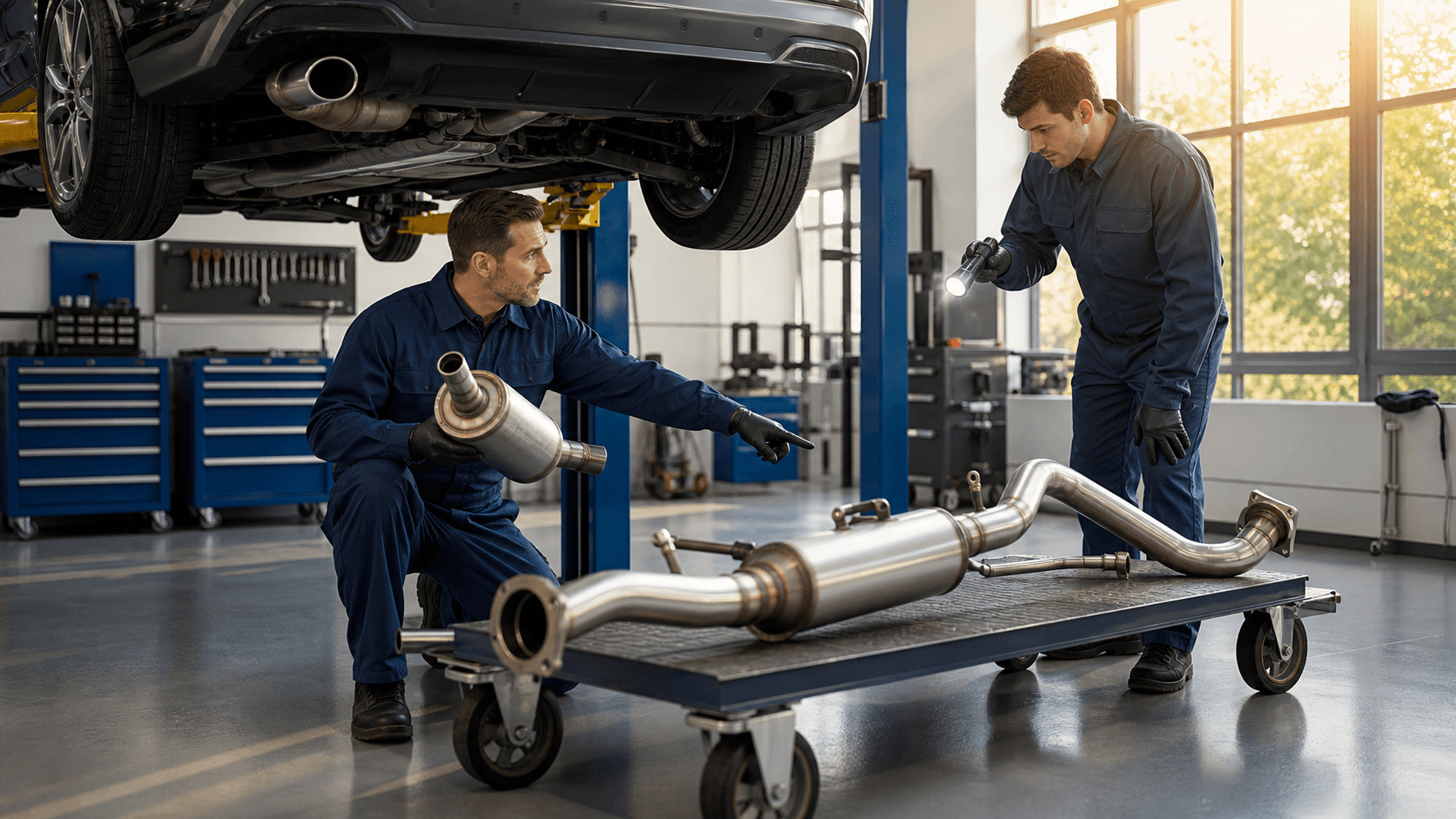
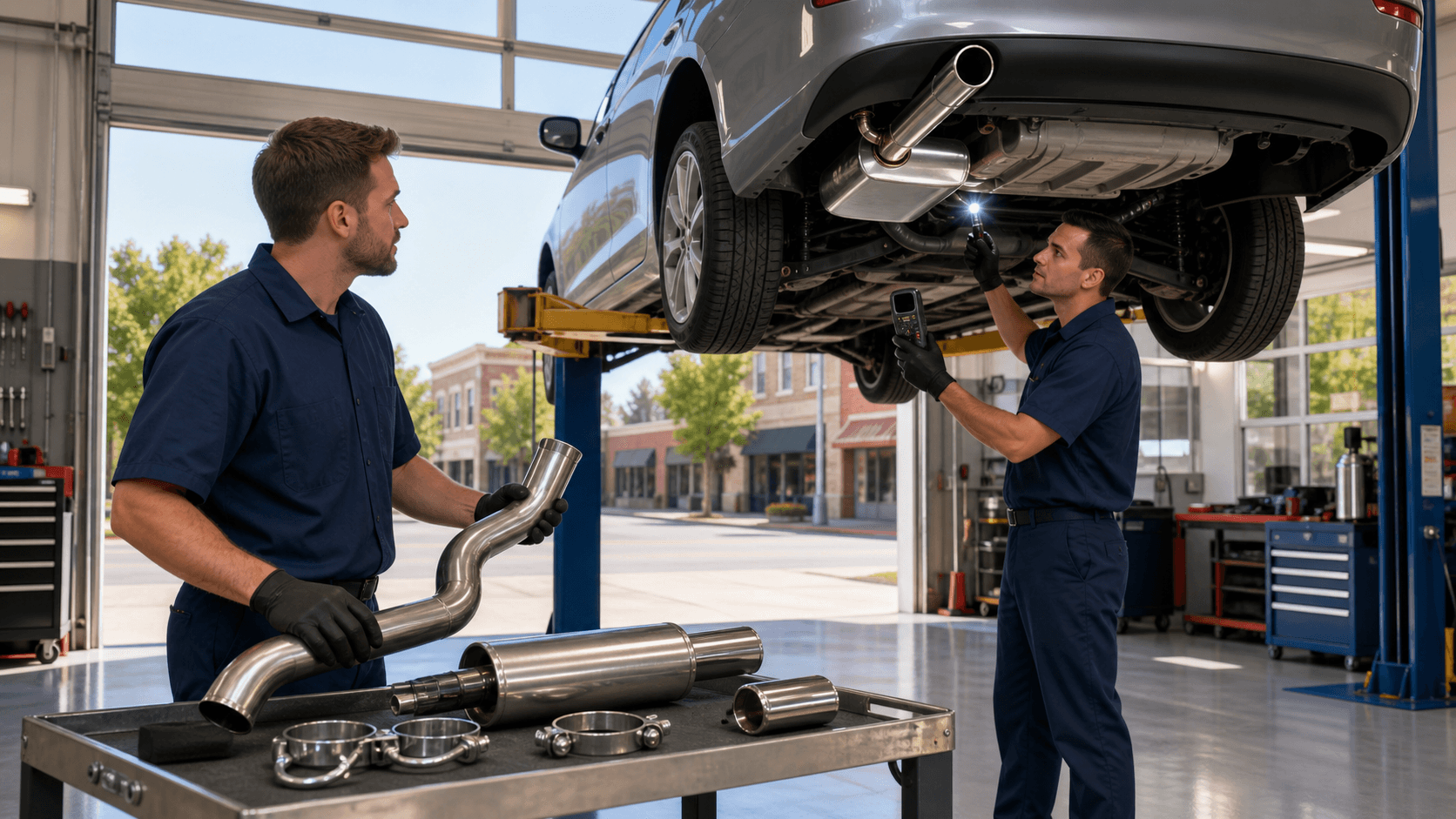
When you bring in a car with an exhaust concern, the visit usually starts with a short talk about what you are hearing or smelling. A road test can help the technician hear the same noise you do and notice when it shows up, such as under load, at idle, or only over bumps. After that, the car goes on a lift so the whole exhaust system can be checked from front to back.
A careful inspection includes:
- Looking for rust, cracks, and holes in mufflers and pipes
- Checking hangers, mounts, and shields for looseness or damage
- Examining gaskets and joints for signs of leaks
- Inspecting connections at the catalytic converter and manifold
Once the problem is found, it should be explained in clear, simple terms before any work starts. Written, upfront information lets you understand what is wrong and what repair paths are available.
Common repair options can include:
- Sealing or repairing small, accessible leaks when appropriate
- Replacing a damaged section of pipe instead of the whole system
- Installing a new muffler if the old one is rusted through
- Fixing or replacing broken hangers or mounts to stop rattles
- Addressing related parts, like gaskets or connections, so the fix lasts
Quality parts and experienced technicians help the repair hold up to local driving and wet weather. A full-service shop that works on daily drivers and classic cars can also look for issues that might affect older or custom exhaust systems, such as special bends or hangers.
Exhaust FAQs for Sutherlin Drivers
Here are answers to common questions we hear about muffler repair and exhaust noise.
How much does muffler repair cost?
Costs depend on what is damaged, how rusty the system is, and whether the fix is a small repair or a larger section replacement. Custom bends, older vehicles, and hard-to-find parts can also change the total. A clear estimate before work begins helps you decide on the best option.
How long does muffler repair take?
Many basic muffler repairs or straightforward replacements can be done within a few hours once the car is in the bay. More complex work that involves multiple sections or heavy rust may take longer. Some drivers prefer to wait at the shop, while others drop off their car and pick it up later in the day.
Which noises and smells should never be ignored?
You should not ignore:
- Strong exhaust or fuel smell inside the cabin
- Loud new noises that start right after an impact or bump
- Rattling parts that sound like they might break off
- Exhaust that sounds like it is leaking near the front of the car
Is my muffler the problem, or another exhaust part?
Deep, booming noise and visible rust at the rear often point to the muffler. Sharp ticking, hissing near the engine, or smells at the front of the car can point to leaks in pipes, gaskets, or the manifold area. A full inspection is the best way to know for sure.
How often should the exhaust system be inspected?
A good habit is to have the exhaust checked during regular service visits, before longer trips, and any time you hit something in the road. In Oregon's wet climate, looking underneath now and then helps catch rust and loose parts early.
How can I help my exhaust last longer in wet weather?
Helpful habits include:
- Addressing small leaks or rattles as soon as you notice them
- Having hangers and heat shields checked so they do not fail suddenly
- Rinsing the underbody if you drive on muddy, gritty roads often
- Avoiding deep puddles that splash hot exhaust parts with cold water
When is it safe to keep driving with a noisy exhaust?
If the noise is louder but there are no fumes, no harsh vibration, and nothing is dragging, many drivers can safely drive a short distance to a shop. If you smell exhaust inside, hear parts clanking under the car, or see pipes hanging low, it is better to get help right away so you avoid more damage and stay safe on the road.
Restore Quiet, Reliable Performance To Your Vehicle Today
If your car is louder than usual or you notice exhaust smells, it is time to schedule professional muffler repair with Over the Hill Auto. Our technicians will inspect your exhaust system, explain what we find, and recommend the most practical fix for your budget. We work efficiently so you can get back on the road safely with a quieter, smoother ride. To set up an appointment or ask a question, simply contact us.