How Oregon Backroads Quietly Destroy Your Suspension
Rough Oregon backroads can be hard on your vehicle, even when everything feels fine from behind the wheel. Every washboard gravel stretch, hidden pothole, and rutted driveway gives your shocks, struts, and bushings a solid hit. Over time, that adds up to real suspension wear, even on newer vehicles.
Suspension problems are not just about comfort. Worn parts can increase stopping distance, make the vehicle harder to control in a quick maneuver, and chew through tires long before they should wear out. In this article, we explain how local roads around Sutherlin and Douglas County beat up suspension parts, what to watch for, and how smart habits can help delay suspension repair.
We are a local full-service NAPA AutoCare and ProVantage repair shop, and we see what our roads do to domestic and European vehicles every day. Our goal is to help you spot trouble early and keep your car or truck safe and stable on the roads you actually drive.
How Rough Oregon Roads Damage Shocks, Struts, and Bushings
Anyone who drives logging roads, farm roads, or gravel shortcuts around Sutherlin and Roseburg knows they are not easy on a vehicle. Even at moderate speeds, the constant pounding and vibration are hard on suspension parts.
Here is how that rough terrain attacks each component:
- Washboard gravel makes your suspension bounce rapidly, working shocks and struts nonstop
- Deep potholes and broken pavement send sharp impacts up through the wheels and suspension
- Rutted driveways and forest roads twist the suspension, stressing bushings and mounts
- Loaded trips with gear or trailers increase the force on every bump and dip
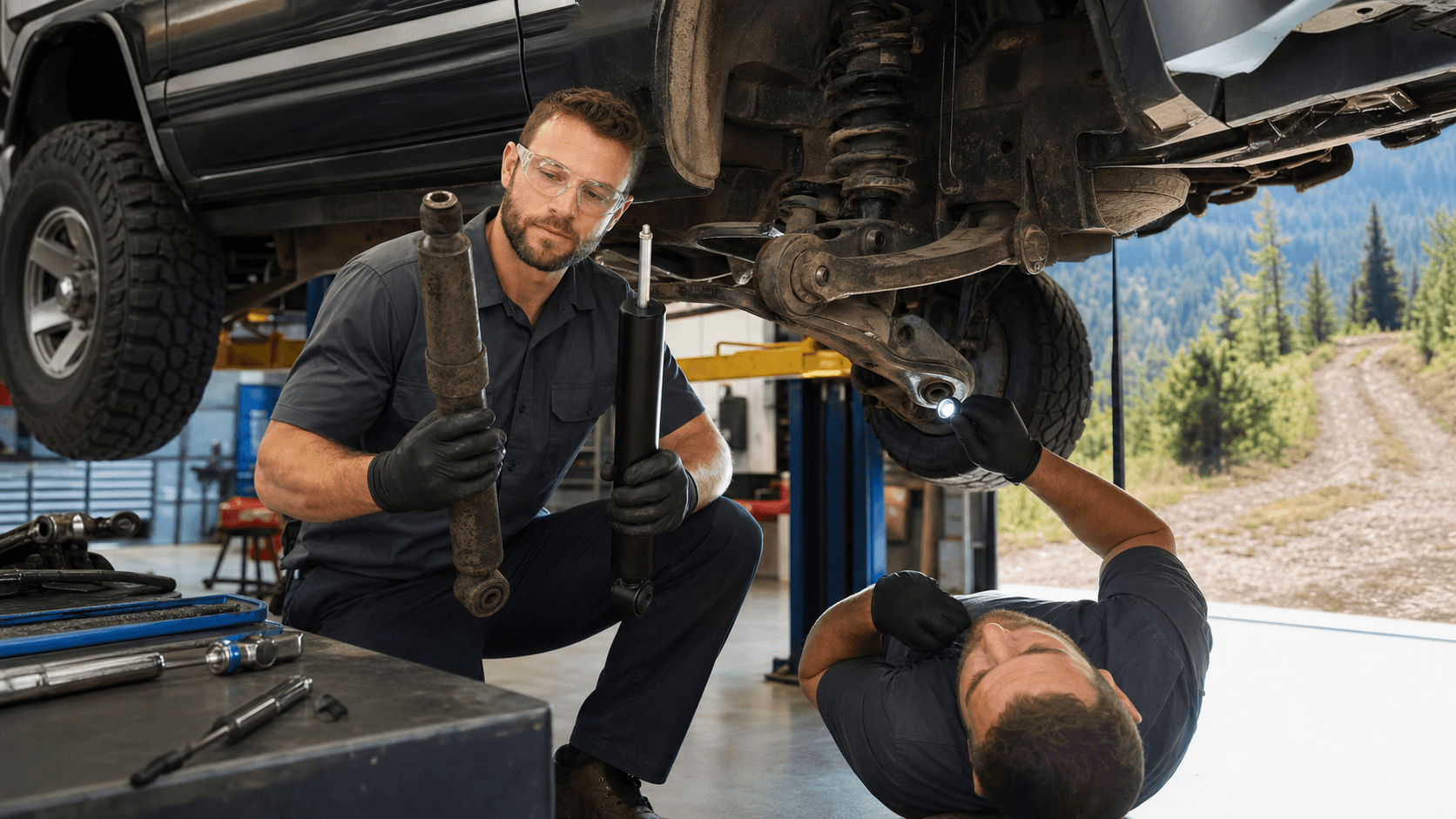
Shocks and struts help control bounce and keep your tires pressed to the road. Inside them are valves and fluid that control how quickly your suspension can move. Repeated hard hits and constant vibration can:
- Wear out internal valves so the vehicle feels bouncy or floaty
- Damage seals, which can lead to leaks
- Reduce the shock or strut's ability to control body roll and nose dive
Bushings are the rubber or rubber-like pieces between metal suspension parts. They help absorb vibration and cut down on noise. On rough Oregon backroads, they are always working. Over time, they can:
- Crack from age and repeated flexing
- Squish out of shape so parts move more than they should
- Tear, which can create clunks, wandering, and odd tire wear
Seasonal changes make it worse. Winter freeze and thaw can break up pavement and create more potholes. Spring can bring new ruts and washouts on gravel roads. In summer, heavy camping loads, boat trailers, and extra gear put more stress on already tired components. Fall rain can hide potholes and rocks under standing water, leading to sudden hits you never saw coming.
Warning Signs Your Suspension Is Taking a Beating
Suspension wear often sneaks up on drivers. Parts get weaker little by little, so the vehicle might feel "normal" simply because you got used to it. Still, there are clear warning signs that your shocks, struts, or bushings are not happy.
Common symptoms include:
- Extra bouncing after going over a bump or speed hump
- The front of the vehicle dipping hard when you brake
- Clunking, thumping, or knocking sounds on rough roads
- Uneven, cupped, or scalloped tire wear
- Steering that feels loose, wanders, or needs constant correction
- A floaty, boat-like ride, or the opposite, a harsh, jarring ride
Drivers who often tow, haul heavy loads, or head up into the hills on weekends usually see these signs sooner. The vehicle might bottom out more easily, or you might feel every rock and groove in the road.
Ignoring these issues can lead to:
- Longer stopping distances, especially in rain
- Less traction in corners, especially on winding highways
- Poor emergency handling when you need to swerve or brake hard
- Extra wear on tires, tie rods, ball joints, and other steering parts
When suspension problems start to show up, it usually means the system has been under stress for a while.
Smart Habits to Prevent Premature Suspension Repair
You cannot change the roads, but you can change how your suspension experiences them. A few simple habits can help your shocks, struts, and bushings last longer before they need suspension repair.
Driving tips that help protect your suspension:
- Slow down for gravel and washboard stretches instead of trying to "skim" over them
- Avoid straddling potholes. Try to go around them when it is safe to do so.
- Reduce speed when loaded with camping gear, tools, or trailers
- Take it easy on rough forest service roads, especially if the vehicle is low or heavily loaded
- Avoid hitting curbs or deep ruts at an angle, which can twist suspension parts
Maintenance habits also play a big role:
- Have alignment checked after a hard winter or serious pothole impacts
- Rotate tires on a regular schedule so you can spot uneven wear early
- Ask for suspension components to be inspected during oil changes
- Get a full suspension check before long road trips or big summer plans
A good suspension inspection looks at shocks, struts, bushings, ball joints, tie rods, and tire wear patterns. It also includes a test drive to feel for noises, pulling, and bounce. Finding small problems before they grow can delay major suspension repair and keep your vehicle safe on and off the highway.
Suspension Repair FAQs for Oregon Drivers
We hear a lot of the same questions from drivers who spend time on local backroads. Here are straight answers to some of the most common ones.
What Are the Most Common Symptoms of Bad Shocks, Struts, or Bushings?
Some of the main signs include clunks and knocks over bumps, squeaks when the suspension moves, vibration at certain speeds, and bottoming out on dips. You might also feel the vehicle pulling to one side, notice the steering wheel shaking, or see uneven tire wear. If you feel every small bump on a road that used to feel smooth, that can point to worn components.
How Long Does Suspension Repair Typically Take?
Many inspections and basic diagnostics can be done the same day or by the next day. Replacing a pair of shocks or struts often takes part of a day. Jobs that involve bushings or control arms can take longer, especially if there is rust or other hidden damage. Parts availability and what we find during the inspection can change the timing, so clear communication is important. In most cases, you can plan on leaving the vehicle with us for at least half a day.
How Often Should I Have My Suspension Checked?
A quick visual check at every oil change is a good habit. For most Oregon drivers, a more detailed suspension inspection once a year, or every 12,000 to 15,000 miles, works well. If you drive a lot of gravel, tow often, or use forest roads regularly, more frequent checks are smart.
How Often Do Shocks, Struts, and Bushings Usually Need Replacement?
Actual lifespan depends on how and where you drive, but many shocks and struts need attention somewhere around 60,000 to 100,000 miles. Drivers who spend more time on gravel, washboard roads, or heavily loaded may need service sooner. Bushings can last longer, but often start to crack and wear with age, especially on vehicles over 8, 10 years old. Regular inspections help decide the right timing for your vehicle.
When Should I Get Suspension Repair Instead of Waiting?
Do not wait if you notice a sudden change in how your vehicle handles or stops. Any new loud noise over bumps, strong pull to one side, or loose feeling at highway speeds is a sign to get things checked. Acting early can also protect your tires and steering components, which saves money down the road.
Can I Keep Driving Oregon Backroads with a Worn Suspension?
You might be able to, but it is risky. Worn suspension parts reduce control on washboard and gravel, increase the chance of bottoming out, and make it easier to lose traction on curves. Continued rough-road driving can quickly turn minor wear into major damage.
Do I Need an Alignment with New Shocks or Struts?
In many cases, yes. Strut replacement, and many other suspension repairs, should be followed by a four-wheel alignment. That helps protect your tires and brings the vehicle back to proper handling. A test drive after alignment helps confirm everything feels right.
What Should I Expect to Pay for Suspension Repair?
Costs can vary a lot depending on the vehicle and what needs attention. Basic suspension inspections are often inexpensive or included with other services. Replacing a pair of shocks or struts typically costs more than simpler bushing or mount repairs because of parts and labor time. Larger jobs that involve multiple components, alignments, or rusted hardware will be higher. We provide estimates up front so you know what to expect before any work begins.
Are There Ways to Keep Suspension Repair Costs Down?
Staying on top of inspections and fixing small issues early usually costs less than waiting until parts fail. Rotating tires on schedule, getting alignments when needed, and driving a bit slower on rough backroads all help parts last longer and reduce the chance of needing major suspension work.
Why Summer Is Prime Time for a Suspension Check
As the weather dries out and more people plan camping trips, fishing weekends, and long drives, vehicles tend to see more backroad miles and carry heavier loads. That is exactly when weak suspension parts are most likely to show themselves.
Catching worn shocks, struts, or bushings before those trips helps you:
- Avoid breakdowns or scary moments on remote gravel or forest roads
- Protect new or seasonal tires from fast, uneven wear
- Keep the vehicle stable when loaded with family, friends, and gear
We know the roads around Sutherlin and through Douglas County, and we know what they do to vehicles over time. A thoughtful suspension inspection and honest feedback on what needs attention, and what can wait, can go a long way toward safer, smoother driving on the backroads you love.
Restore Ride Comfort And Safety With Expert Suspension Care
If your vehicle feels rough, noisy, or unstable on the road, we can inspect and repair the problem before it affects your safety. At Over the Hill Auto, our technicians handle everything from minor adjustments to complete suspension repair so your car drives smoothly again. Schedule an appointment or ask a question today through our contact page and we will help you get back to a confident, comfortable ride.