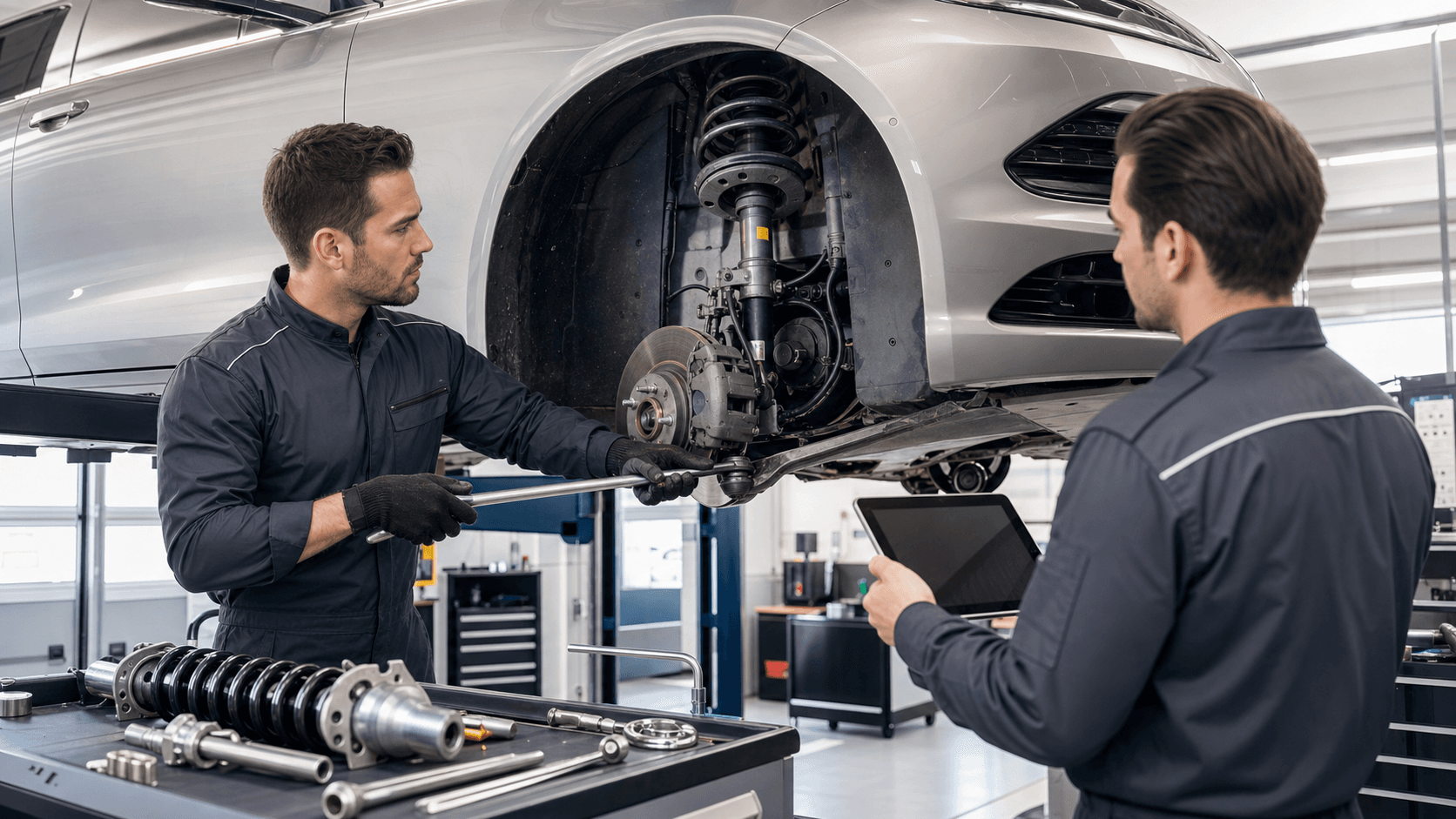
When the spring weather finally sticks around in Sutherlin, many of us start planning longer drives, weekend trips, or just more time behind the wheel. But with light jackets coming out and windows being rolled down again, it's easy to overlook the way the car feels as we drive. A ride that feels loose, bouncy, or slow to respond may not just be from the road, it could be from your suspension.
Your car's suspension plays a quiet but constant role in keeping travel smooth, especially during the switch to warmer weather. If you've felt more shaking or swaying than usual, it might be time to think about a checkup. Catching signs early can make a big difference, especially before summer travel begins. A few warning flags can point to the need for suspension repair, and spring happens to be a good time to get ahead of bigger problems.
What the Suspension System Actually Does
The suspension system includes springs, shock absorbers, and other parts that help your car stay balanced and respond safely to bumps, turns, and stops. Its job is to keep all four tires planted on the ground, absorbing force from the road while holding your vehicle steady.
It's not just about comfort. Driving with a worn-out suspension can make steering less sharp, especially around corners. It can also affect braking. If the front end dips hard when you stop or the car takes longer to slow down, there could be wear in the suspension. Those small hits from winter roads, like potholes or washouts, can slowly damage parts without big, obvious signs.
Everything from control arms to bushings takes pressure each time you drive. Over time, those parts wear out. Spring is when we begin to feel the side effects since better weather usually leads to more driving, quicker turns, and heavier loads. If your car isn't handling the way it used to, loose or worn suspension parts might be the reason.
As a NAPA AutoCare Center, Over the Hill Auto inspects and repairs suspension systems for all makes and models, including work on custom and classic vehicles. We use quality replacement parts and provide a nationwide warranty on our repairs.
Everyday Signs Something's Off
You don't need to know every part under the car to recognize when something's not working right. In fact, most drivers can sense when something feels different, especially if it keeps happening.
- If your car bounces more than once after going over a speed bump, the shocks may be worn
- A nosedive when braking or a lift in the rear when accelerating could point to suspension imbalances
- If your ride leans during turns or feels like it's drifting to one side, it might mean uneven support
- Rattling or clunking under the car, especially over dips or rough pavement, is worth checking
- Uneven tire wear, especially on one side or edge, could result from bad alignment linked to suspension damage
When these signs show up one at a time, they're easy to brush off. But together, they build a picture of something that may need attention before it becomes harder to drive safely or comfortably.
Sometimes, the warning signs are subtle. You might just notice that bumps in the road seem rougher than before, or the steering feels looser when you go around a sharp corner. Even if your car's ride just feels "different" from last spring, it's usually best not to ignore those early signals. Little noises or shakes can be your car's way of letting you know that the suspension is getting worn out.
Some drivers will also spot problems when washing their car. If you notice the vehicle is sitting lower on one side, or if the wheel wells have less space than before, a sagging spring or worn shock absorber might be to blame. Getting these kinds of problems checked out early can make all the difference in how your car feels and drives all season.
Why Spring is a Smart Time to Check
The roads around Sutherlin take a beating every winter. Cold weather and moisture mean more cracks and dips, which can do more damage to our cars than we think. Each bump or jolt can slowly impact the suspension, especially after snow, slush, or rock salt wear down any exposed parts.
Spring is when we start loading up the car with gear, taking longer road trips, or heading toward higher ground. Oregon's hills, winding routes, and temperature swings mean your car handles more stress than during short winter drives. That's why symptoms like bouncing or dragging can suddenly feel worse in spring, even if they started months ago.
A professional inspection during this seasonal change can catch small issues before they turn into rough rides or roadside problems. That peace of mind can make all the difference when you're hours away from home on a warm-weather getaway.
A springtime suspension check also offers another advantage: it can keep your tires lasting longer. When the suspension wears unevenly, your tires can start to show strange patterns or bald spots, which can make driving even more dangerous during sudden spring showers. Protecting the whole system together means you stay safer and could save money down the road.
Not All Road Trouble Is the Same
It's easy to confuse suspension trouble with problems in other areas of the car. Uneven tire wear can also come from poor alignment. A dragging feeling could be related to brakes. But those all work closely together, so when one system struggles, it can throw off the others.
That's why a visual check under the car isn't always enough. Some suspension problems develop inside the parts, like losing fluid from shocks or wearing down on the inside of a control joint. If something feels off while driving, it's smart to have it checked by someone who can narrow it down to the right issue.
We don't want small problems to turn into big accidents. Feeling like your steering is off or your car bounces more than it should is reason enough to pause before big summer travel plans. Giving yourself time now to respond to early warning signs helps keep unexpected repairs from slowing you down later.
Sometimes a car that handles strangely may have two or three small problems piling up at once, not just a single faulty part. For example, weak shocks can wear out tires faster, which then throws off the balance of your car or truck. If you're noticing new noises, vibrations, or drifting, a complete inspection gives you the best shot at stopping several issues before they get out of hand.
Local drivers also know that Oregon's weather can be unpredictable in spring. One day it's sunny, the next it pours rain. These changes make good suspension even more important because you never know when you'll be driving slick roads or dodging unexpected potholes.
A Safer, Smoother Ride Starts Now
Bouncing after bumps, dragging along slight hills, or feeling uneven during turns aren't just annoyances, they can be signs that your suspension needs some attention. Worn parts usually don't fix themselves, and letting them go can affect everything from tires to overall control behind the wheel.
Spring's changing conditions, plus the urge to travel more, make it the right time to pay attention to your car's ride quality. Whether it's a clunky noise or a loose steering response, suspension repair isn't something to wait on when smooth, safe driving depends on it. Getting ahead of those symptoms now means the roads ahead will feel more solid and stress-free.
Noticing changes in your steering, braking, or the way your car handles bumps could mean your suspension needs attention. Spring is an ideal time for a suspension check since small issues from winter can quickly turn into bigger problems if left unchecked. At Over the Hill Auto, we know how important it is to catch these signs early. Discover how we approach suspension repair and give us a call to schedule your visit.